joão machado - visual poetics
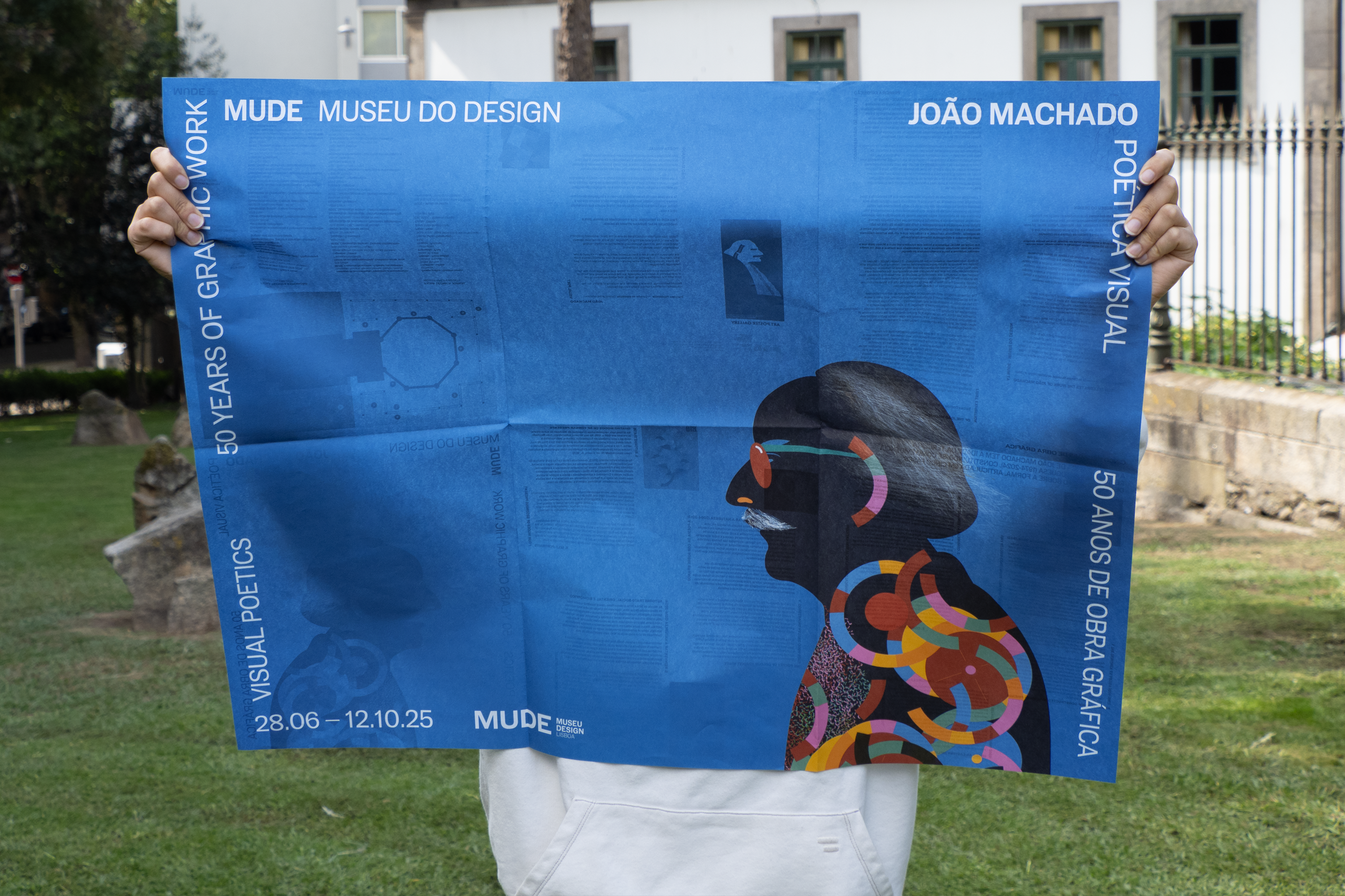
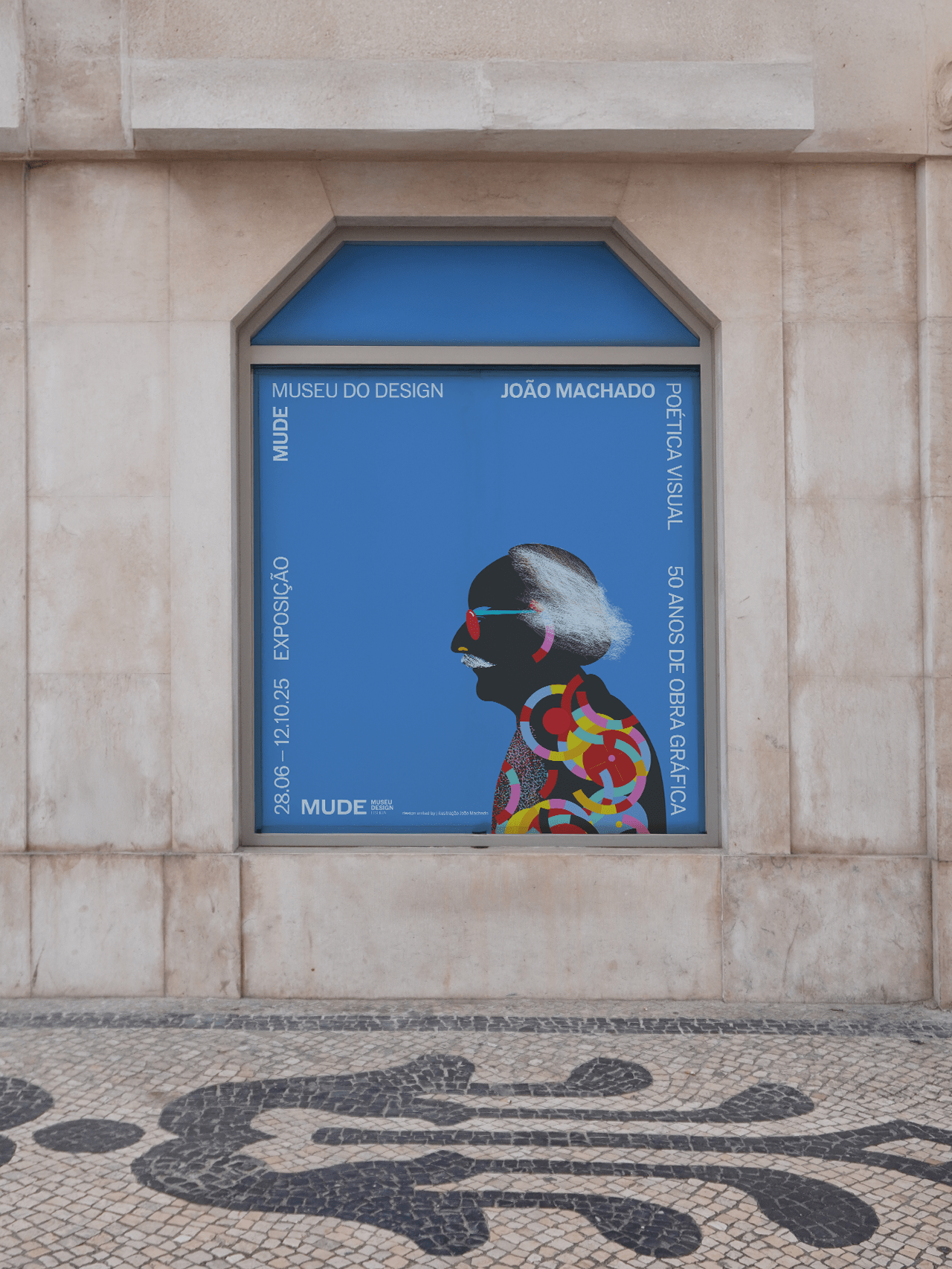
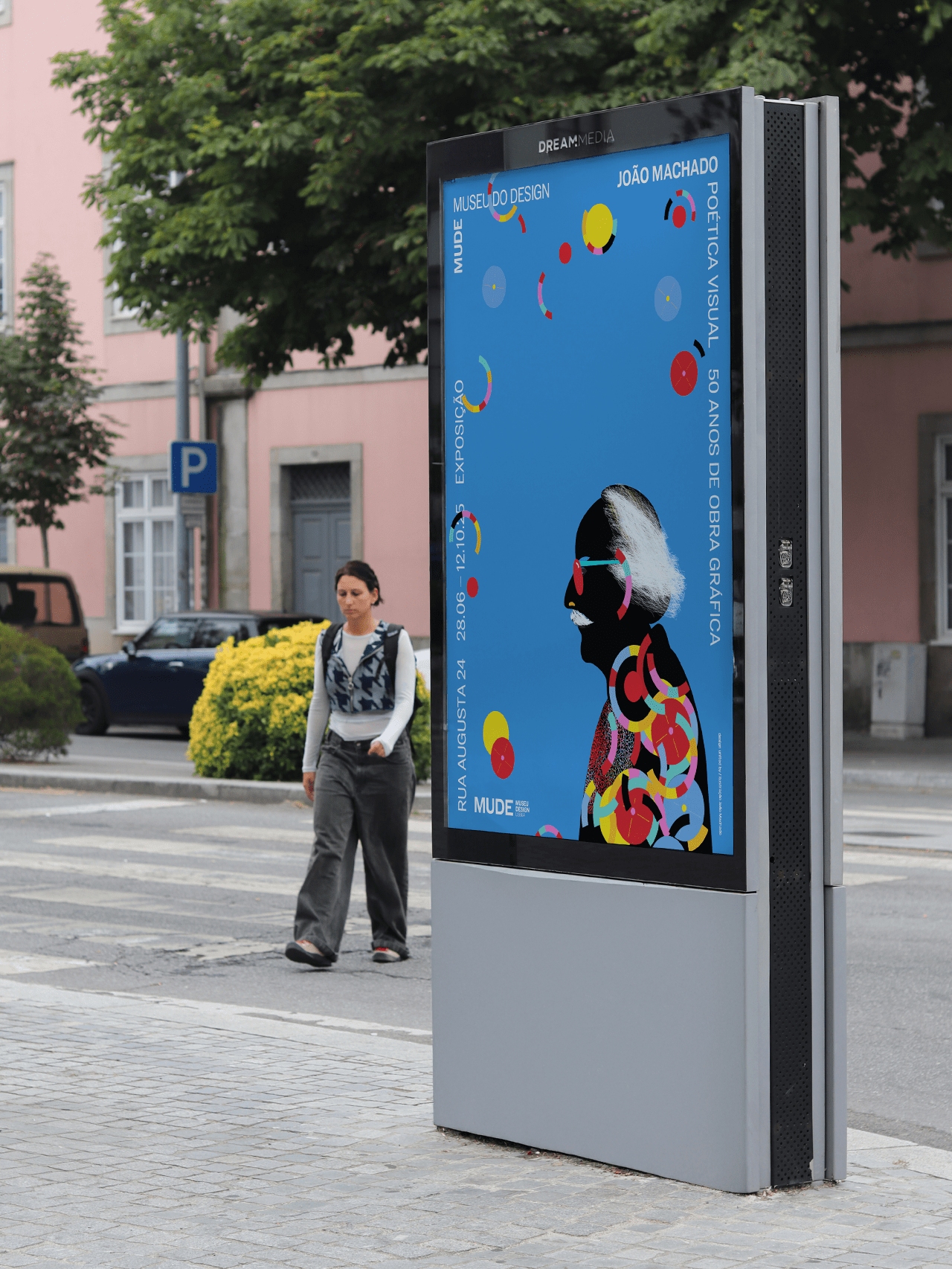
João Machado is a Portuguese graphic designer, born in Coimbra in 1942, who studied sculpture at the Escola Superior de Belas Artes in Porto (1968), where he later taught Graphic Design (1976-1981). With his own studio in Porto since 1981, he specialised in poster design, illustrations, stamps, branding, books, catalogues and merchandising. His work has been recognised internationally, in specialist magazines such as Graphis, Novum and Design Journal, and he has received various national and international awards, including the National Design Prize, CPD - Centro Português de Design (1985), and the Icograda Excellence Award (1999), not to mention, as of 2024, more than one hundred Graphis prizes: 6 platinum, 52 gold, 38 silver and 8 honourable mentions.
In its 1997 edition, devoted to the 400 best posters of the decade, Novum Press published 45 of Machado's works, making him the most represented designer in that edition.
He was also appointed a member of the International Creators Organization, ICA - ICO, Tokyo (1987), named Design Master by the American magazine Graphis 2014) and invited to join the AGI-Alliance Graphique Internationale (2019). The postage stamps he designed for CT - Correios de Portugal gained international acclaim with the Asiago International Award 2005.
In 2015 he was listed by the International Poster Festival of Shenzen (China) as one of the hundred best designers in the world.
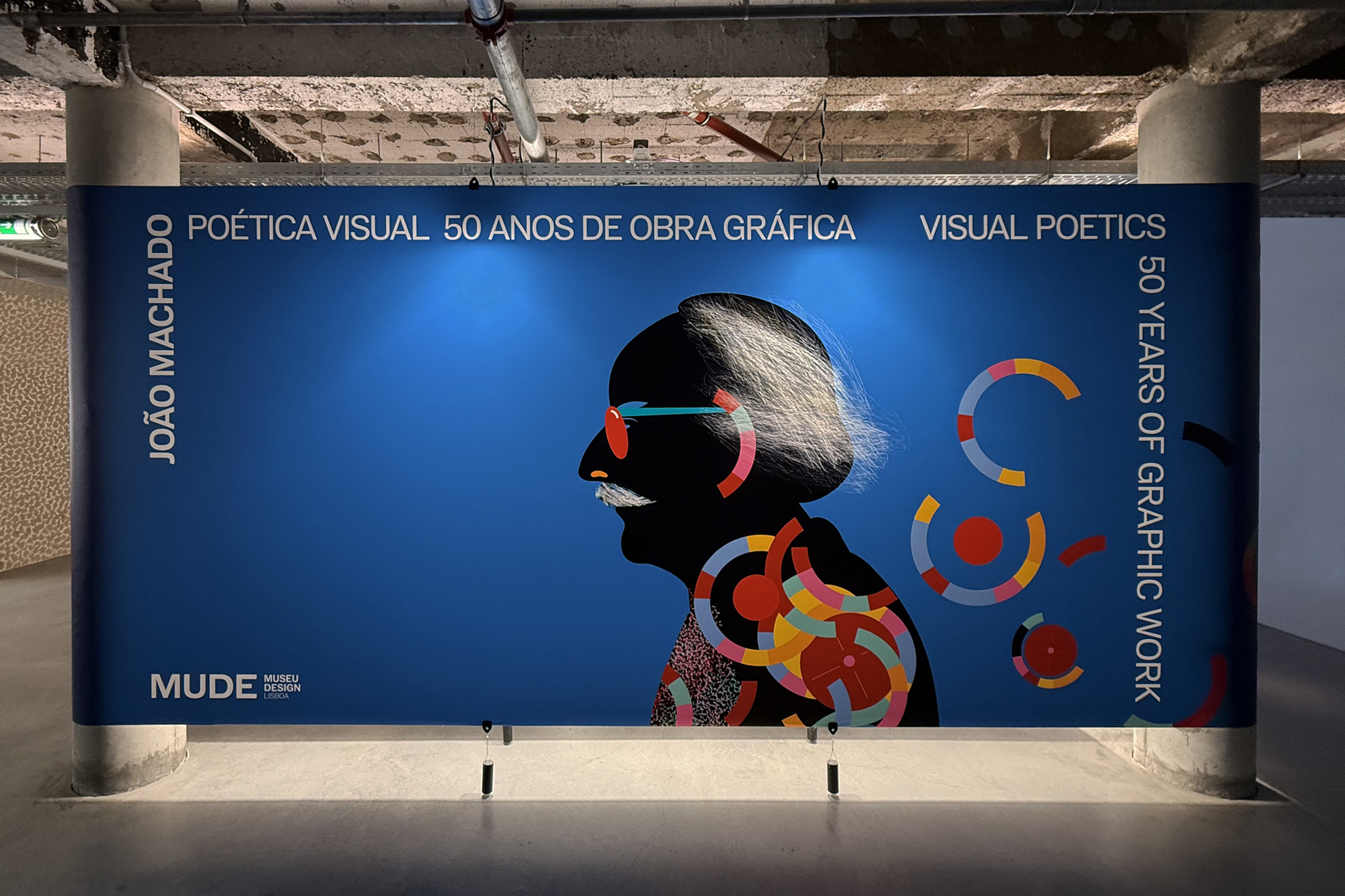
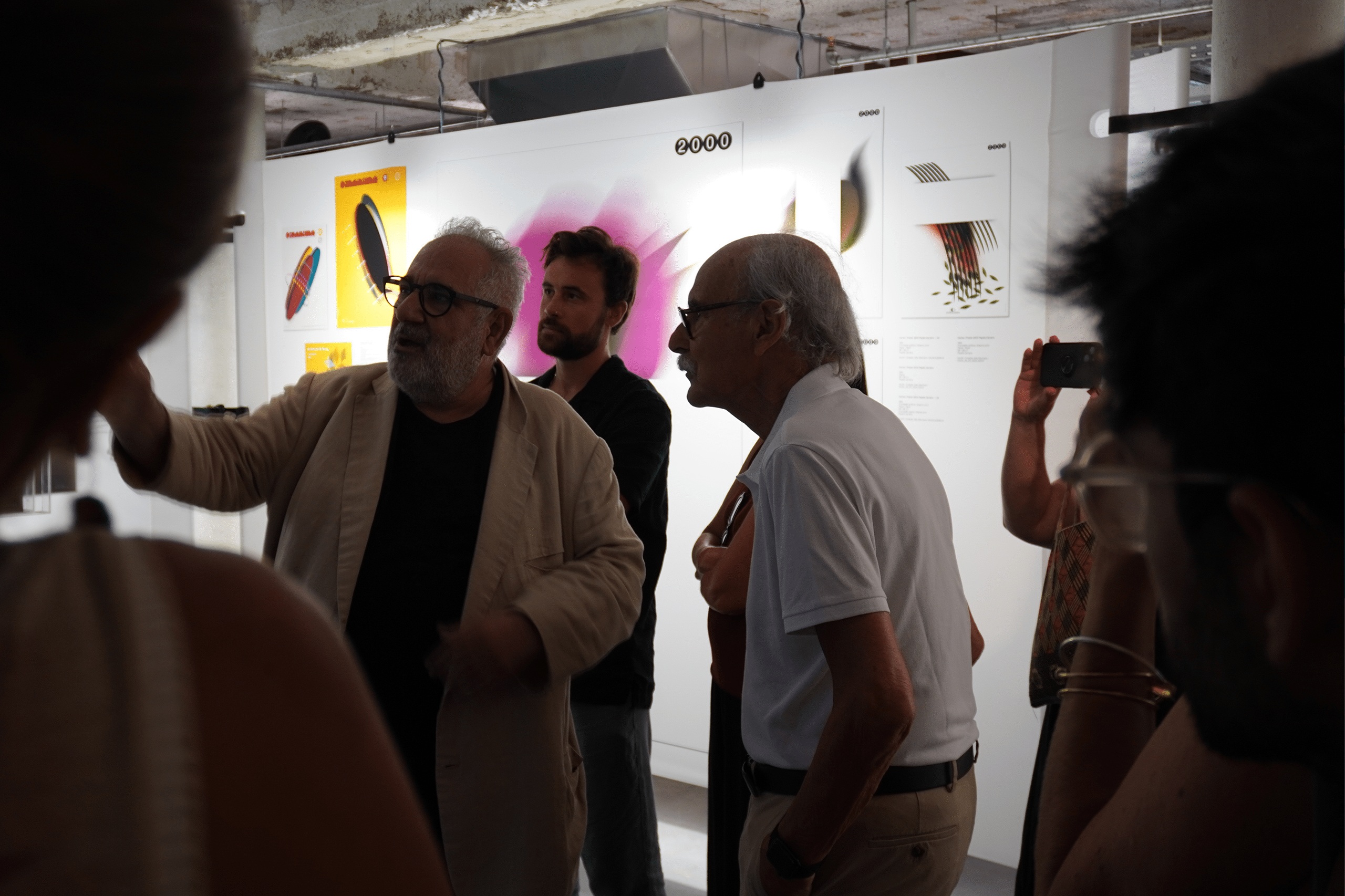
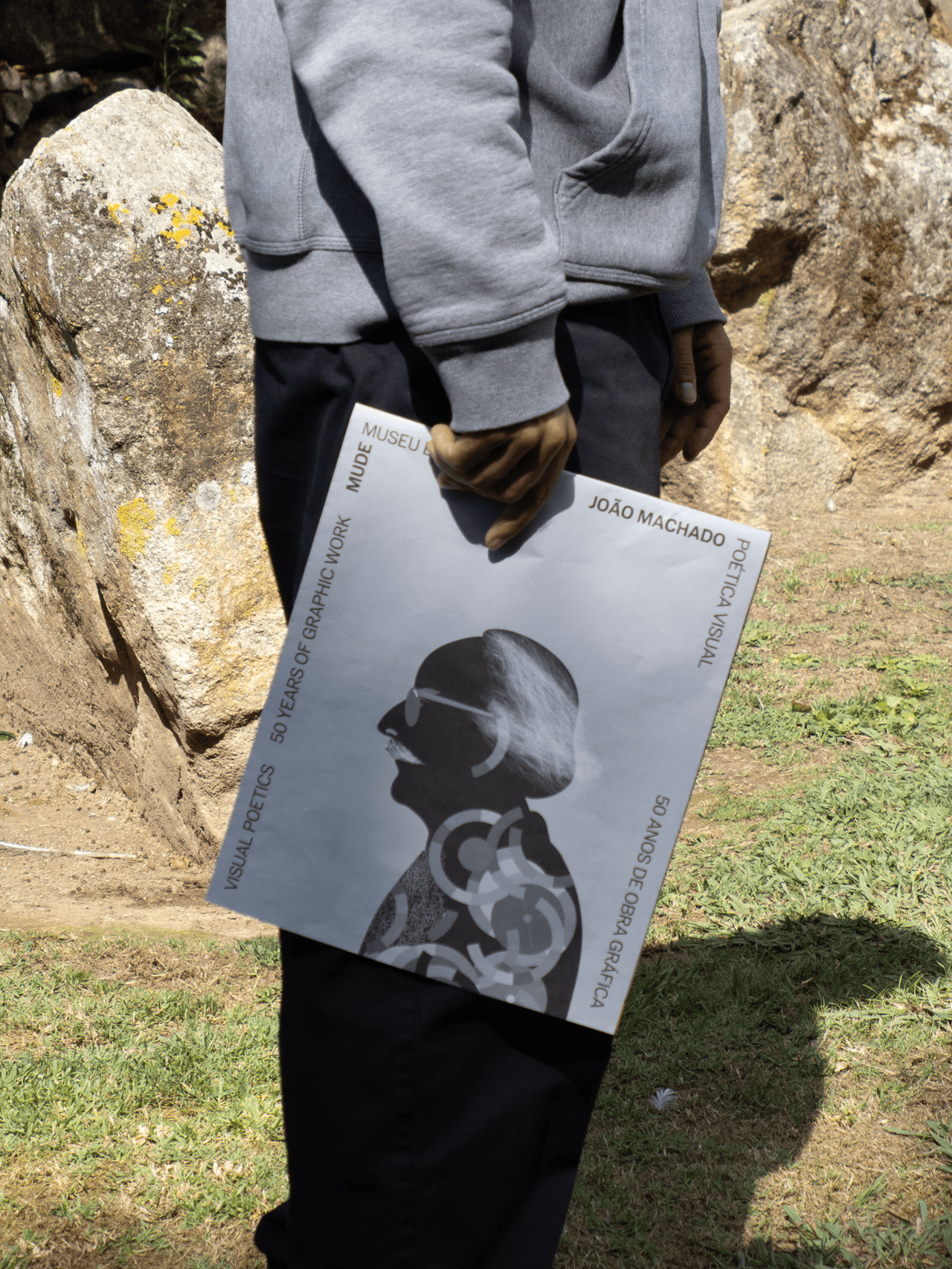
João Machado, Visual Poetics is a chronological, ontological and playful exhibition on 50 years of graphic work by the designer and sculptor João Machado.
As a design exhibition, that is, an exhibition of artefacts of cultural mediation, his 'forms' constit his own specific truth content (Adorno), produced in design projects - meaning, in a laboratory for research and knowledge | duction of the cultural mediator 'form'.
Machado's work is approached here according to a poetic proposal: A poet is one who creates? But poetry, the etymological or of which lies in the Greek poitica ('poie, or emergence and, therefore, creation), is founded in truth and in language (Heidegge truth results from the experience of 'being, language results from the 'form' of pronouncing it - truth and language are the sa as being and form, or form with the condition of being, that is, that which relates us to life. Beyond technology, there is a need the morality of poetry, for the rehabilitation of the (human) being through beauty.
João Machado's work, in its sensory and dream-like immersiveness, sometimes hypnotically alienating, sometimes rousing our conscience into action, does not leave anyone indifferent. For that reason, this exhibition was considered in three scenarios:
· A chronological compilation of facts during the period in question (like a showcase museum);
· A selection of a group of relevant works, organised around five thematic groups (like a point-of-view museum);
· An interactive digital game of de-re-construction of some of his posters (like an accelerator museum).
Francisco Providência
Responding to the curatorial challenge, the exhibition was conceived in accordance with the scenarios proposed by the curators.
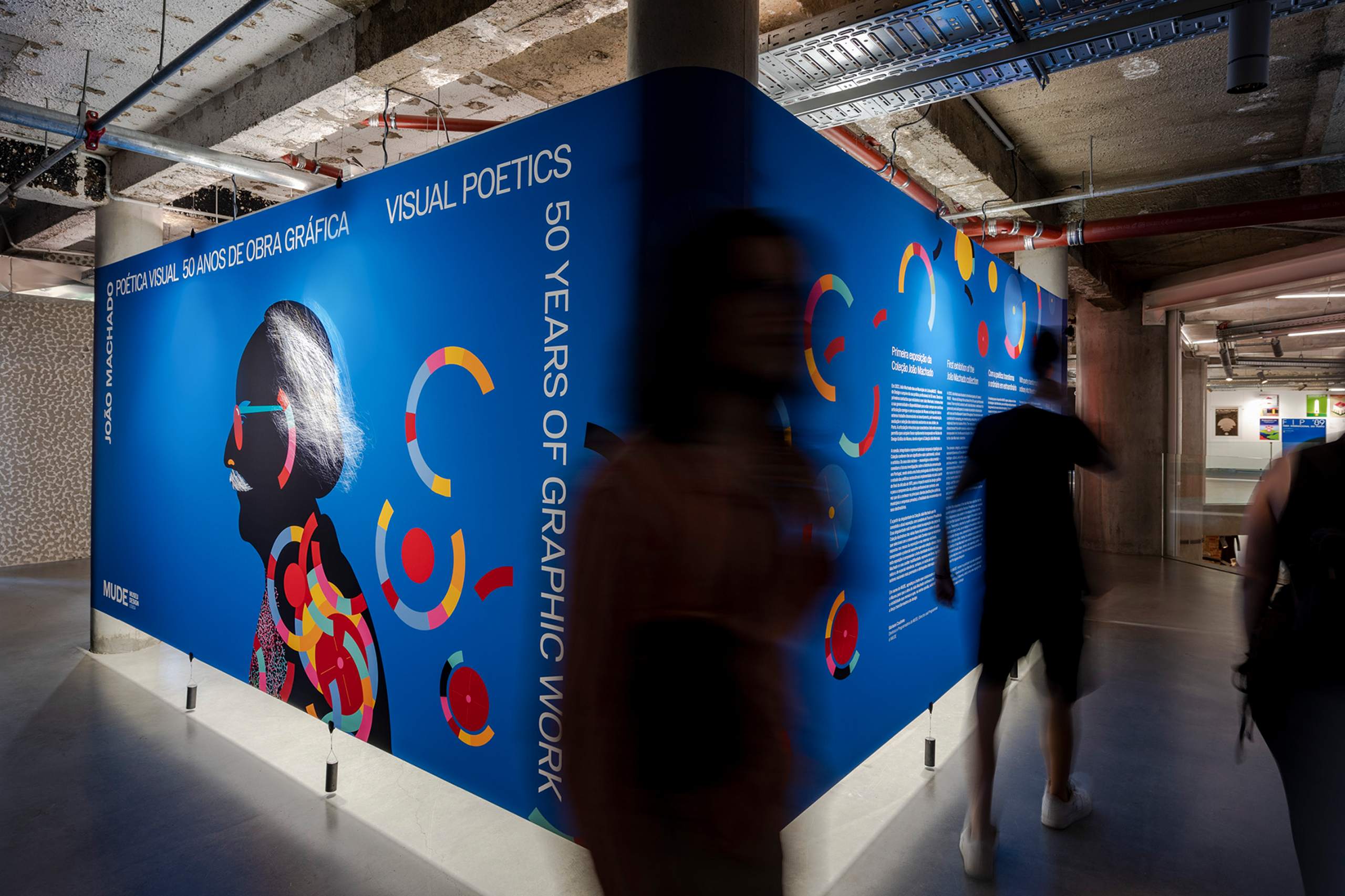
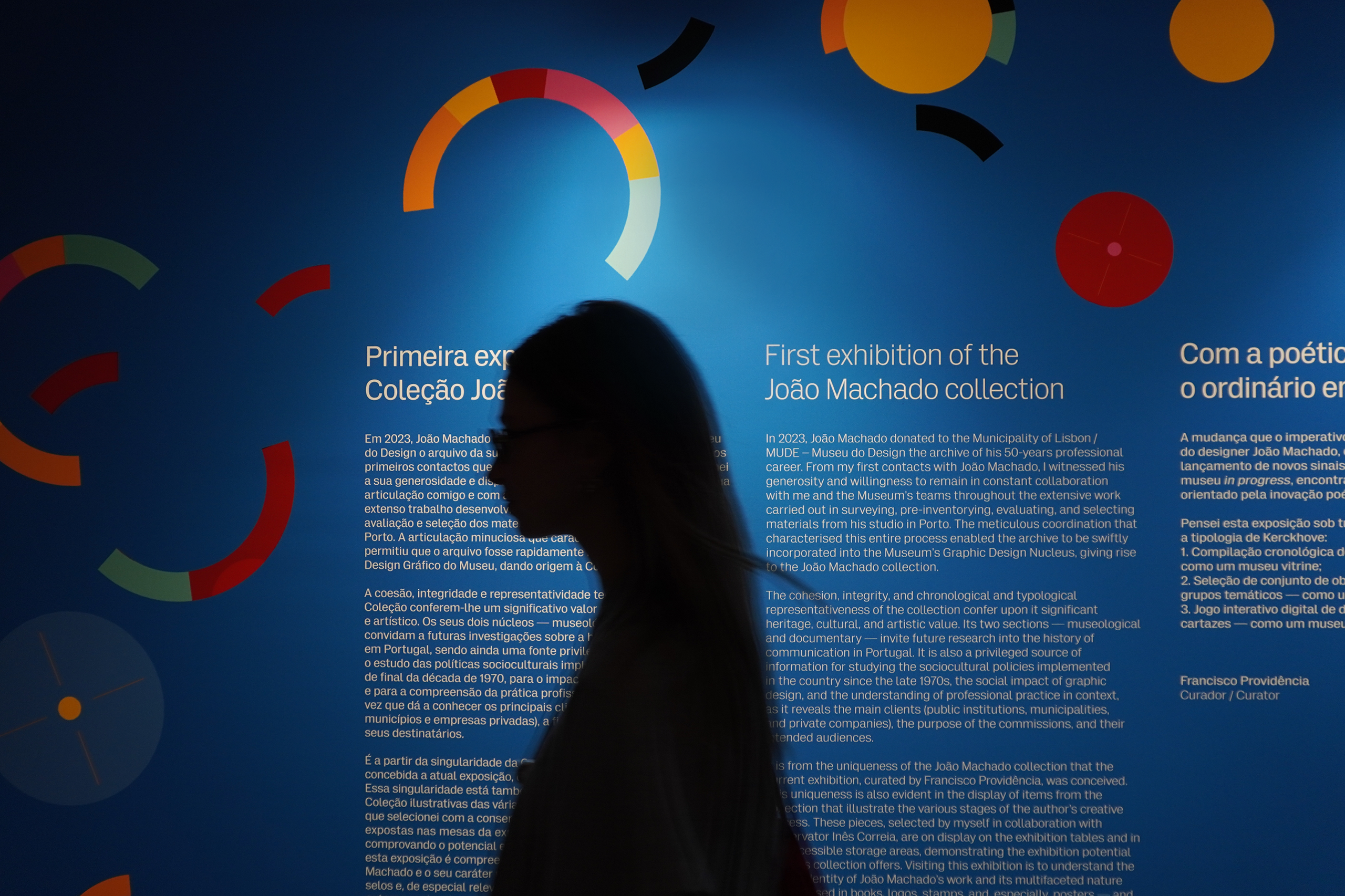
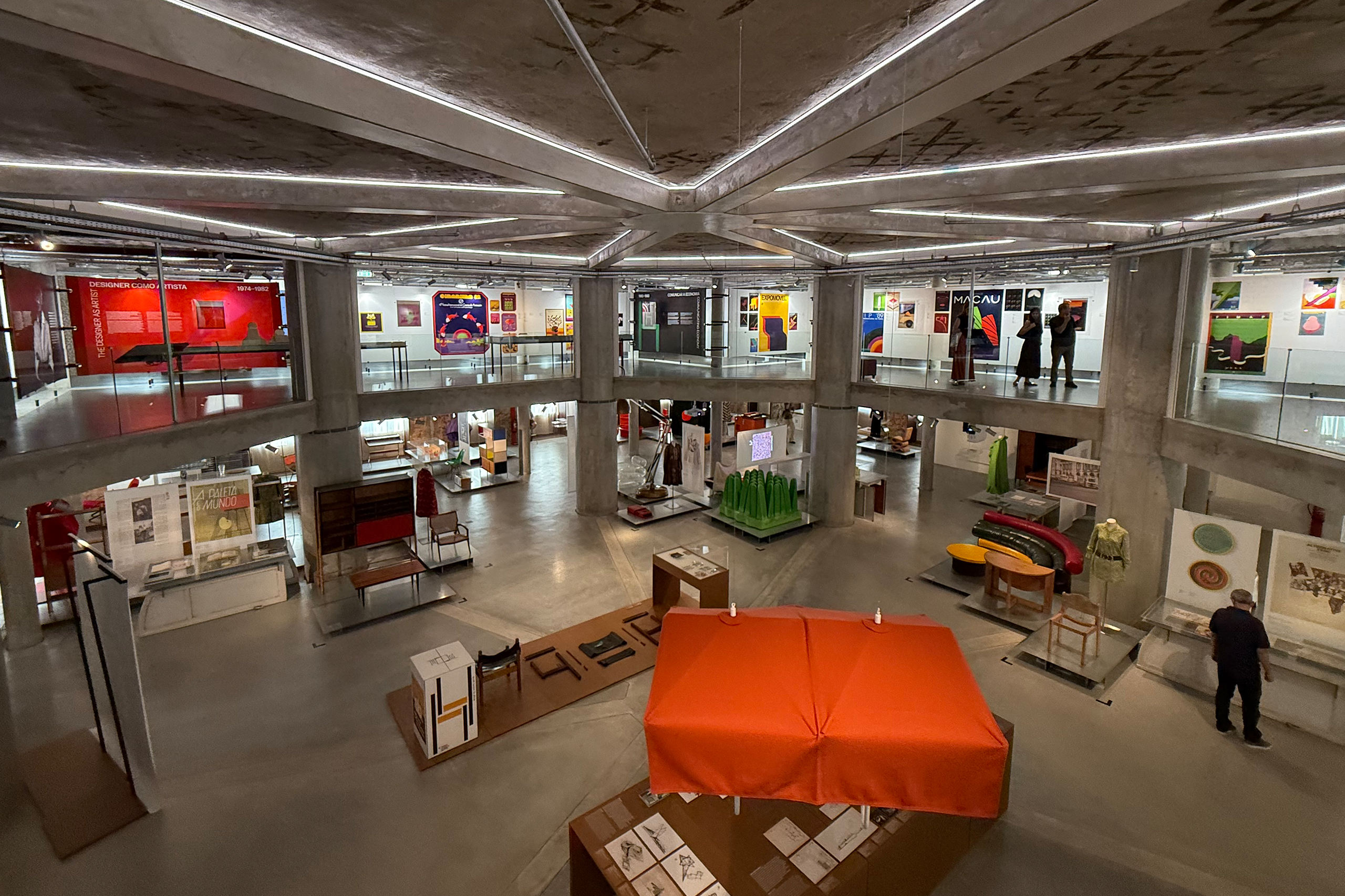
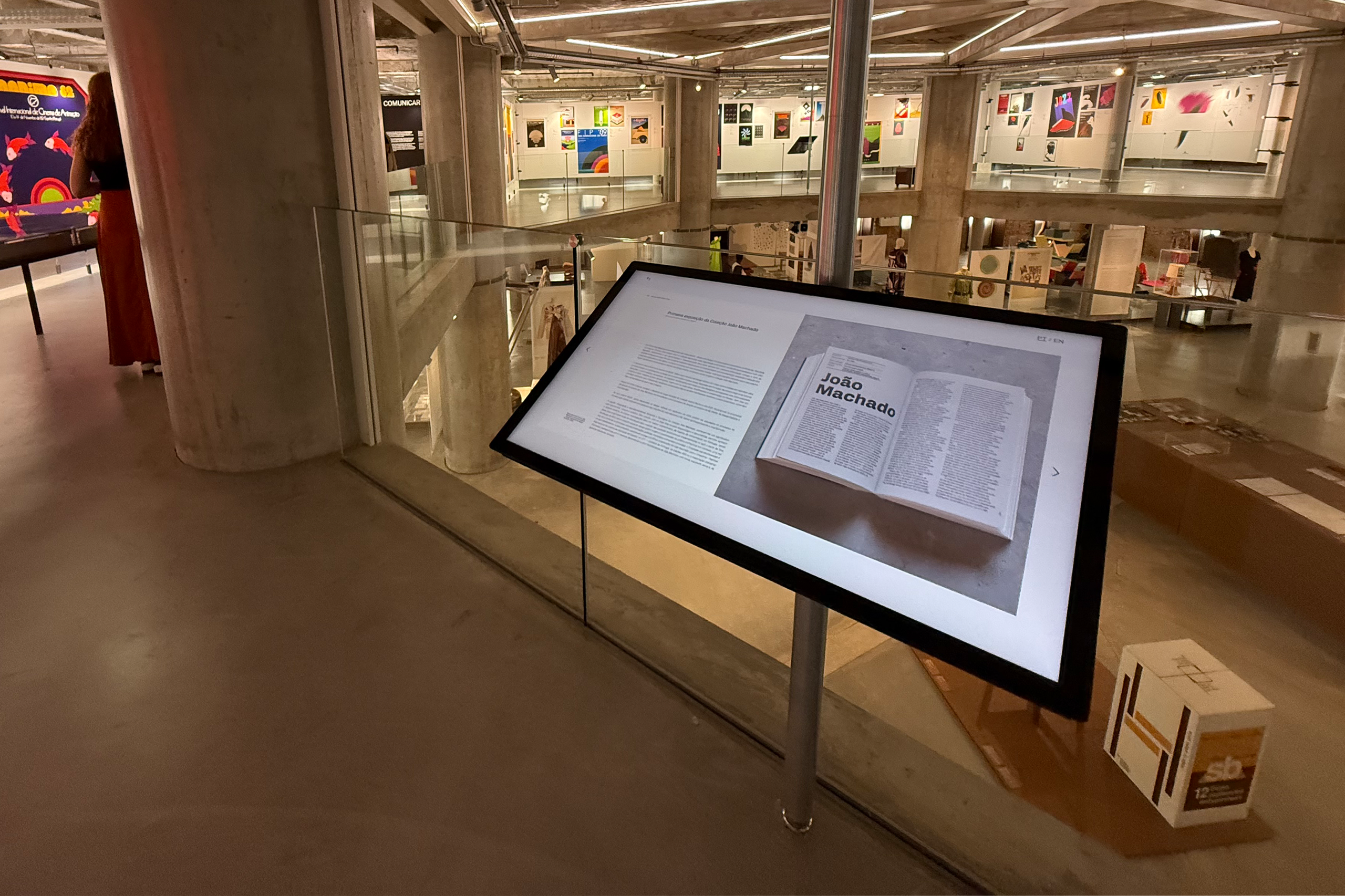
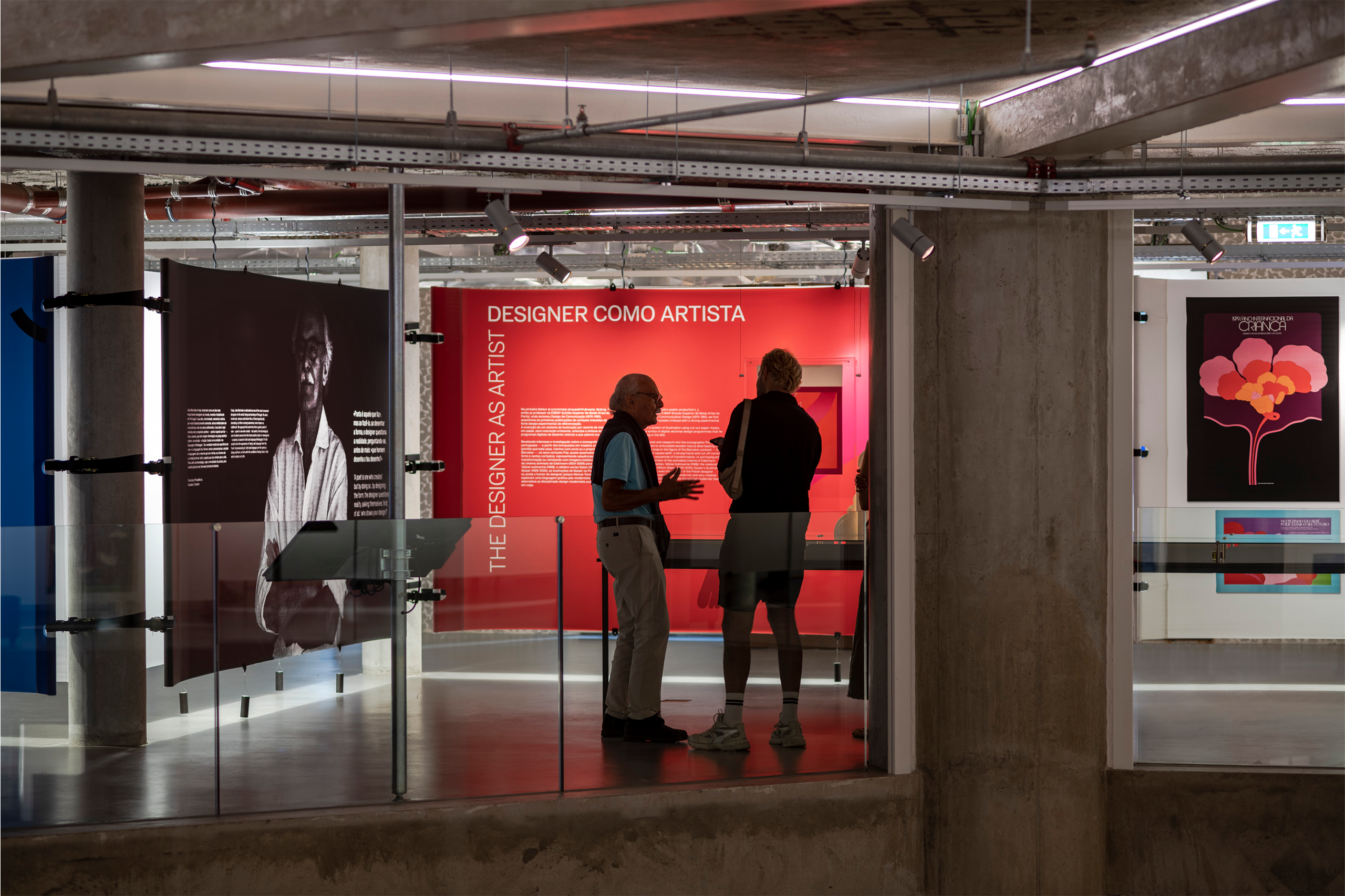
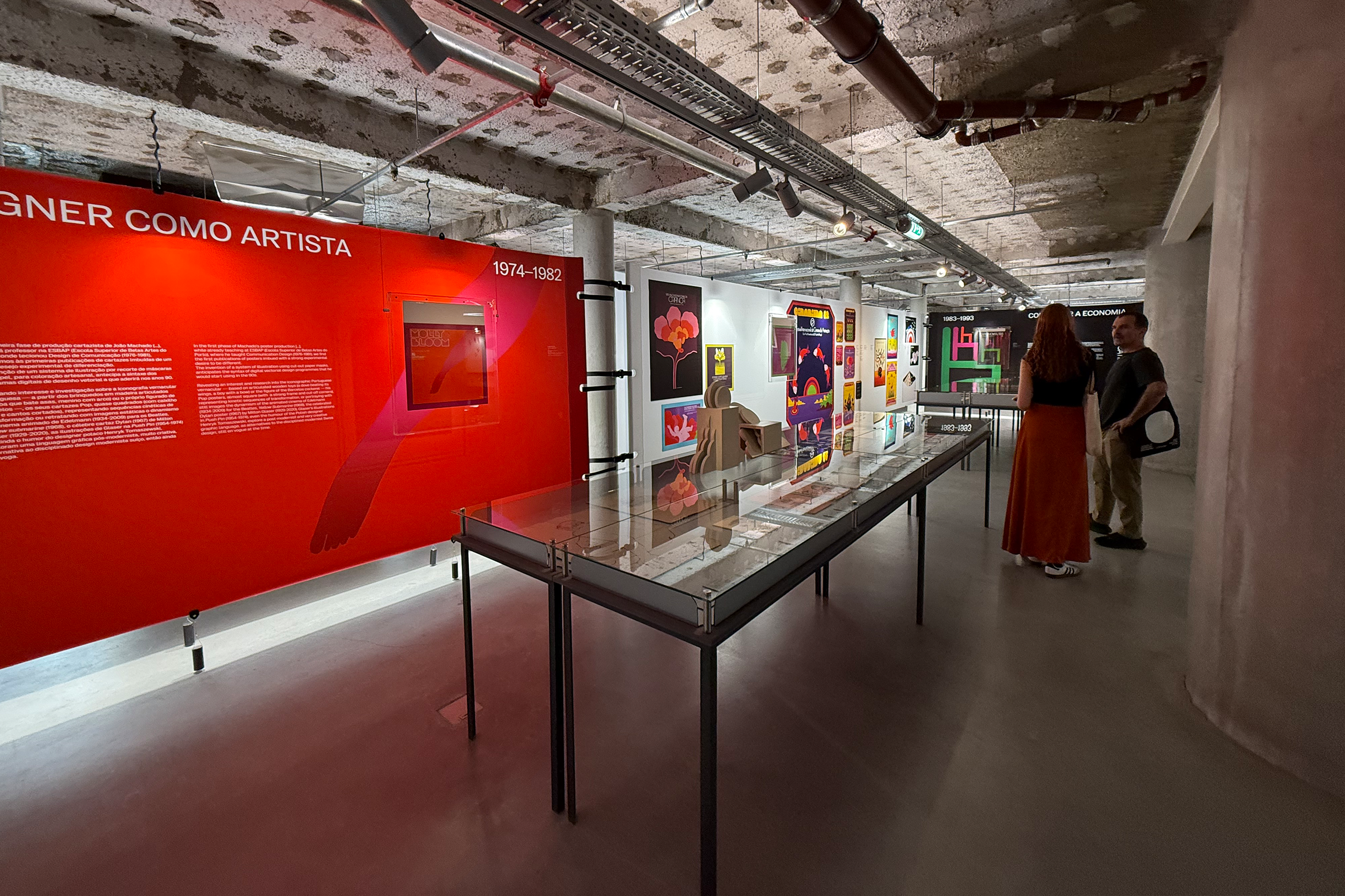
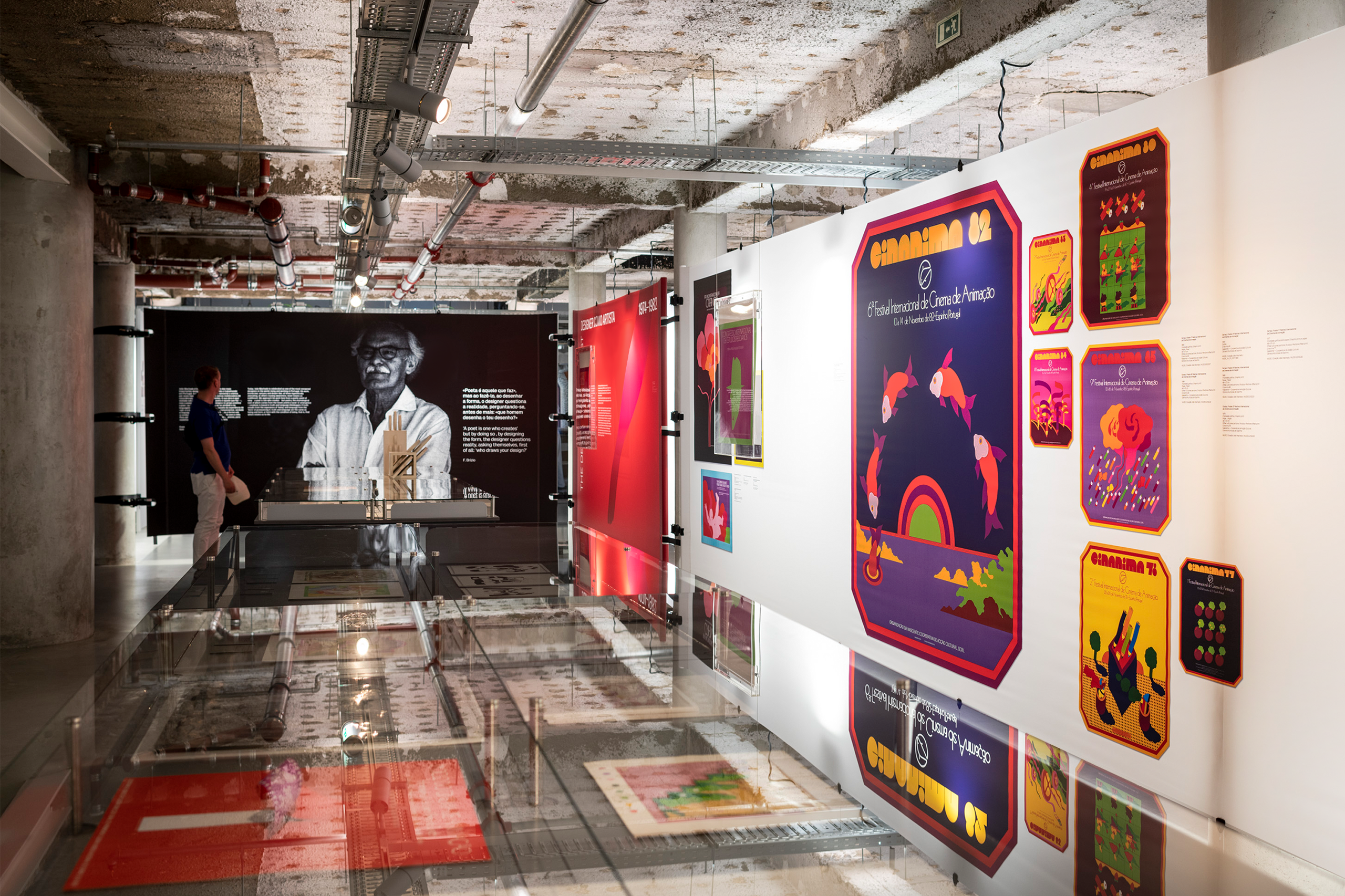
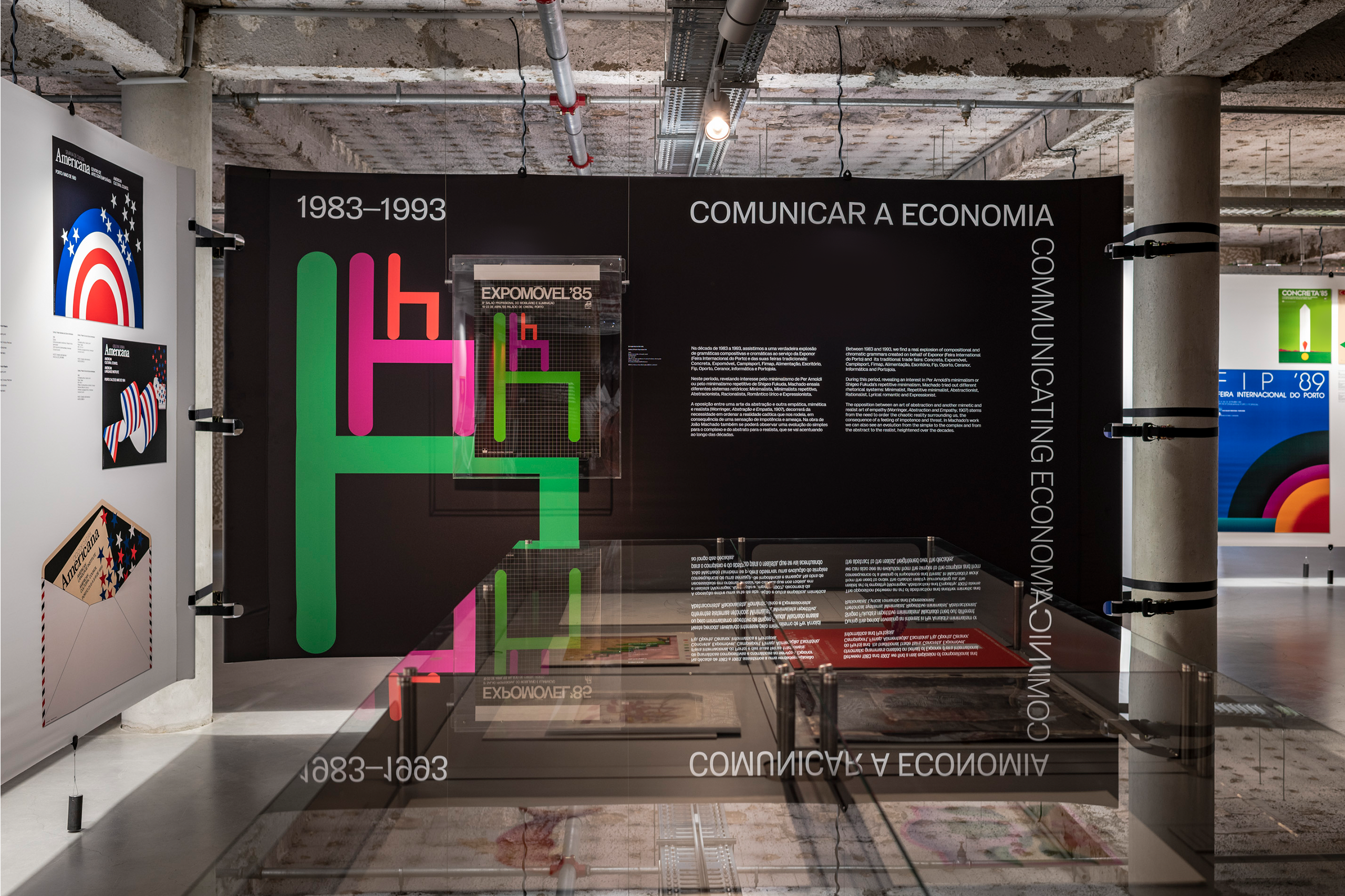
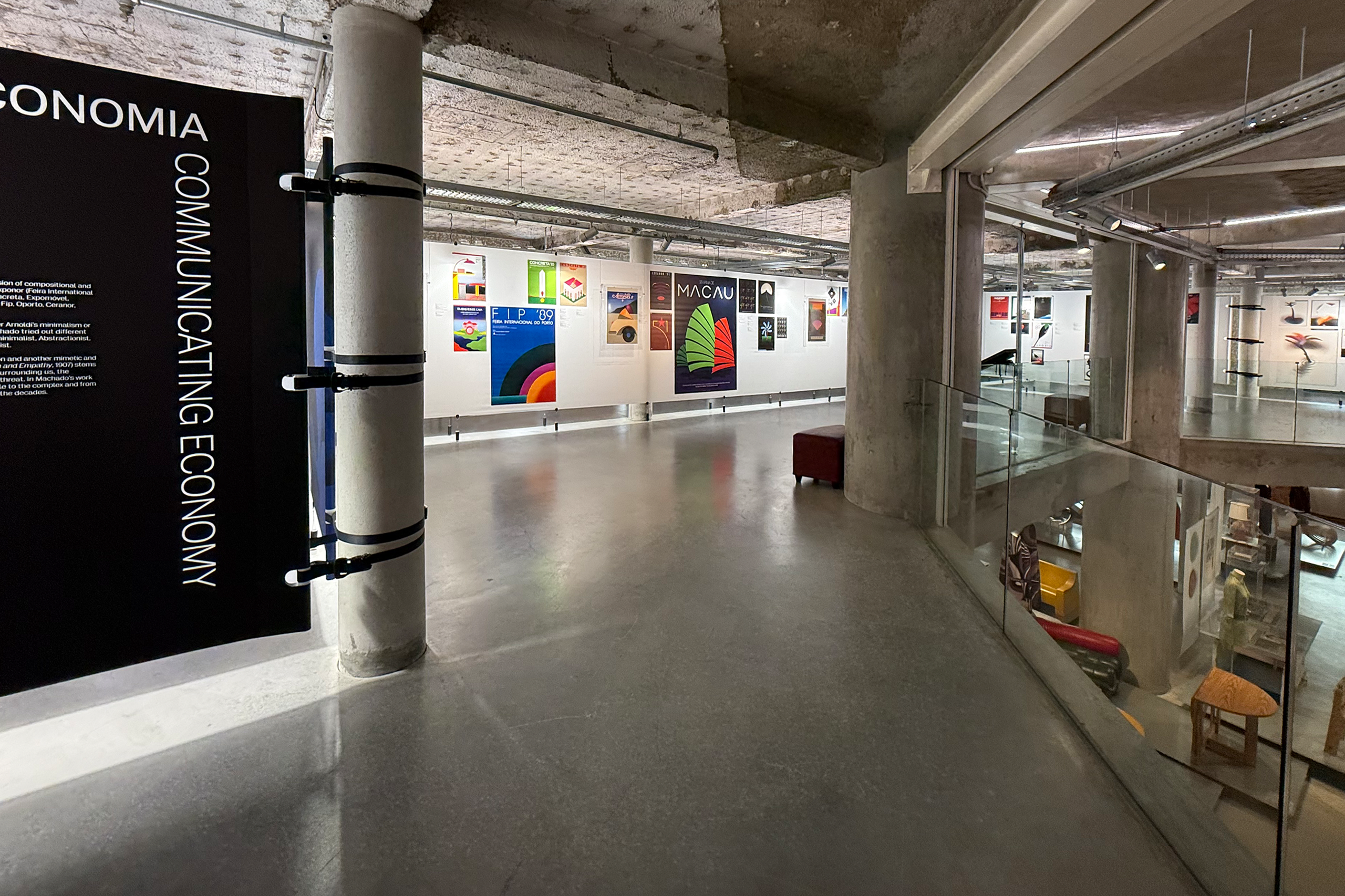
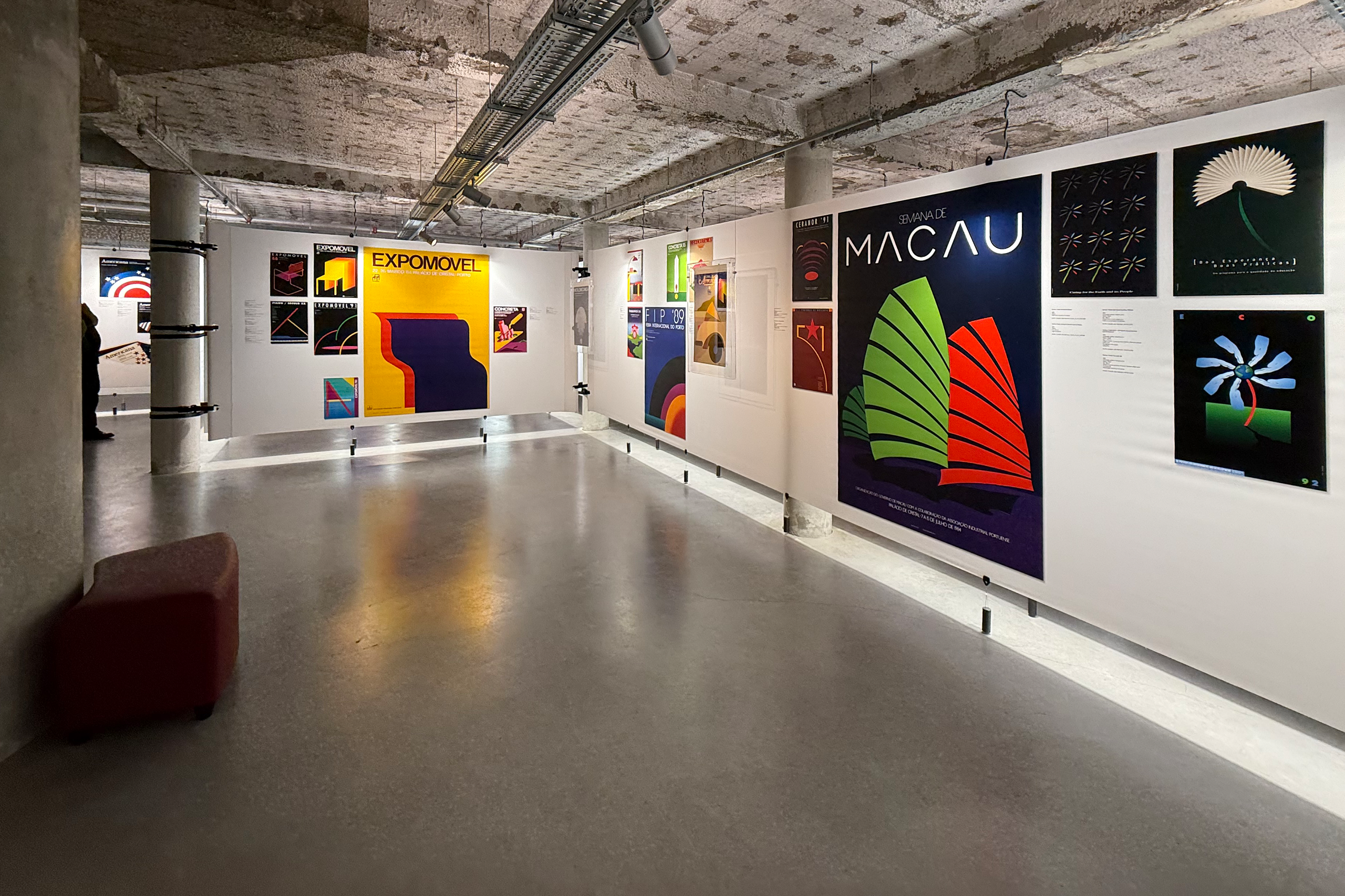
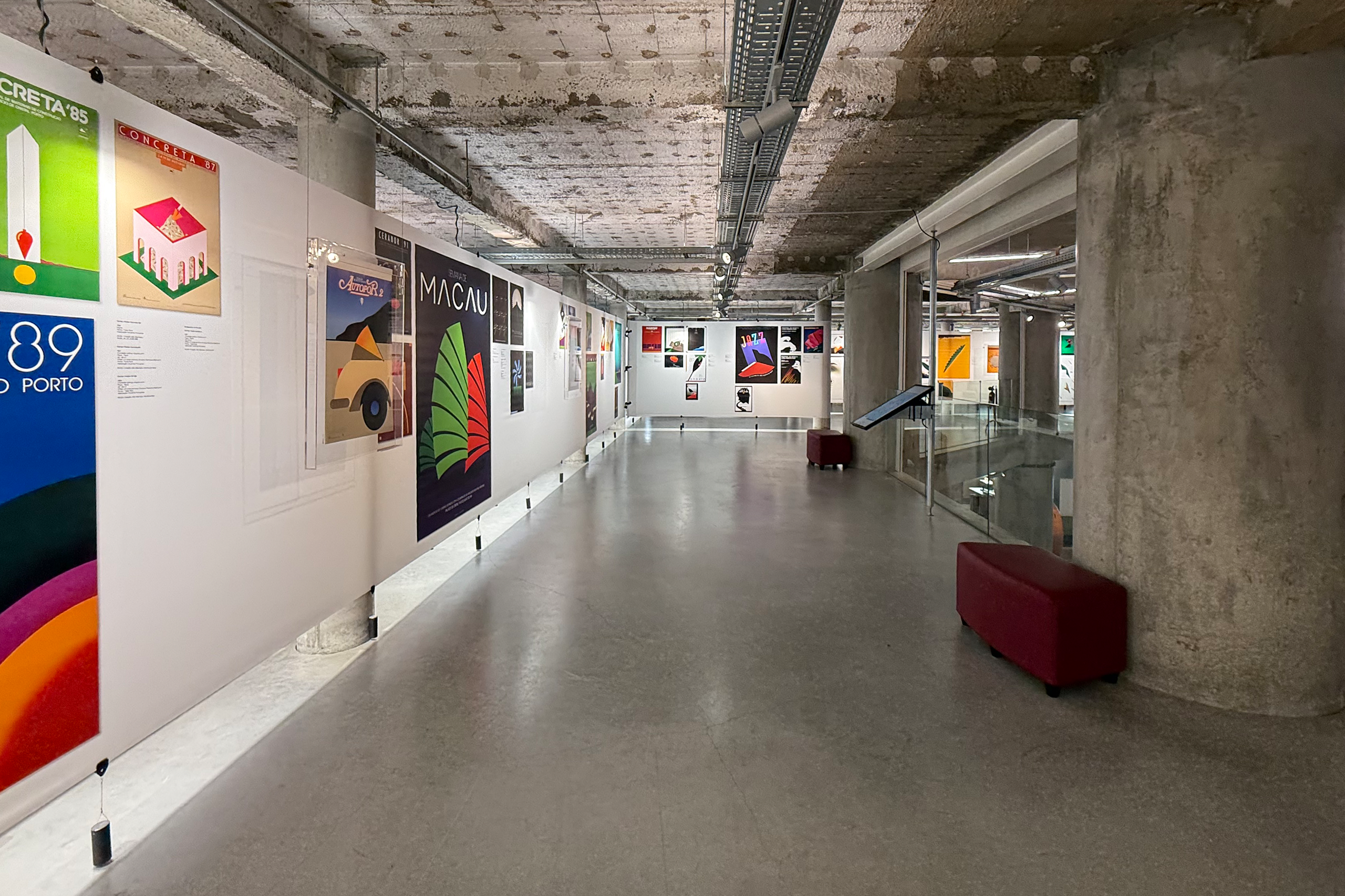
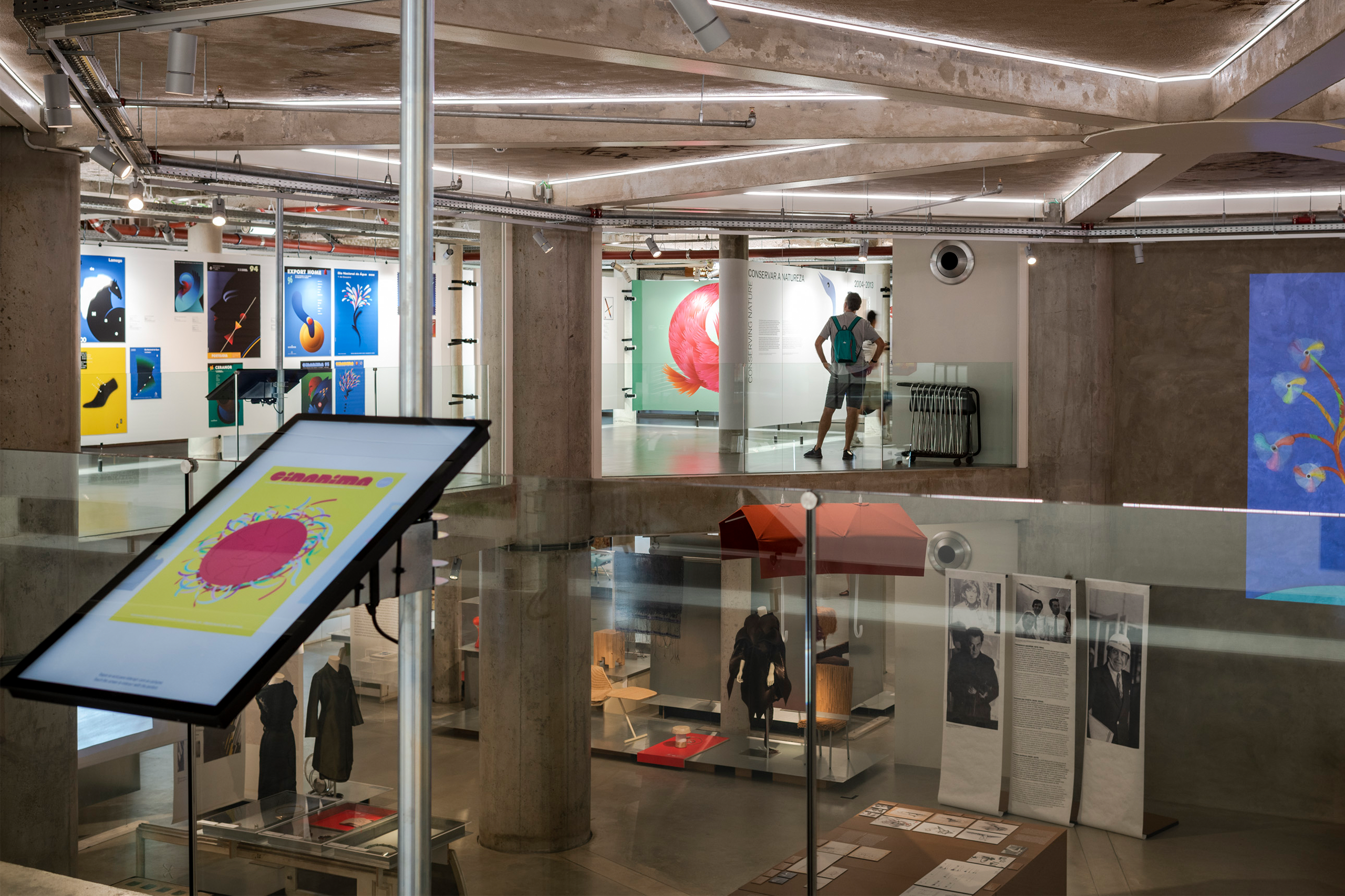
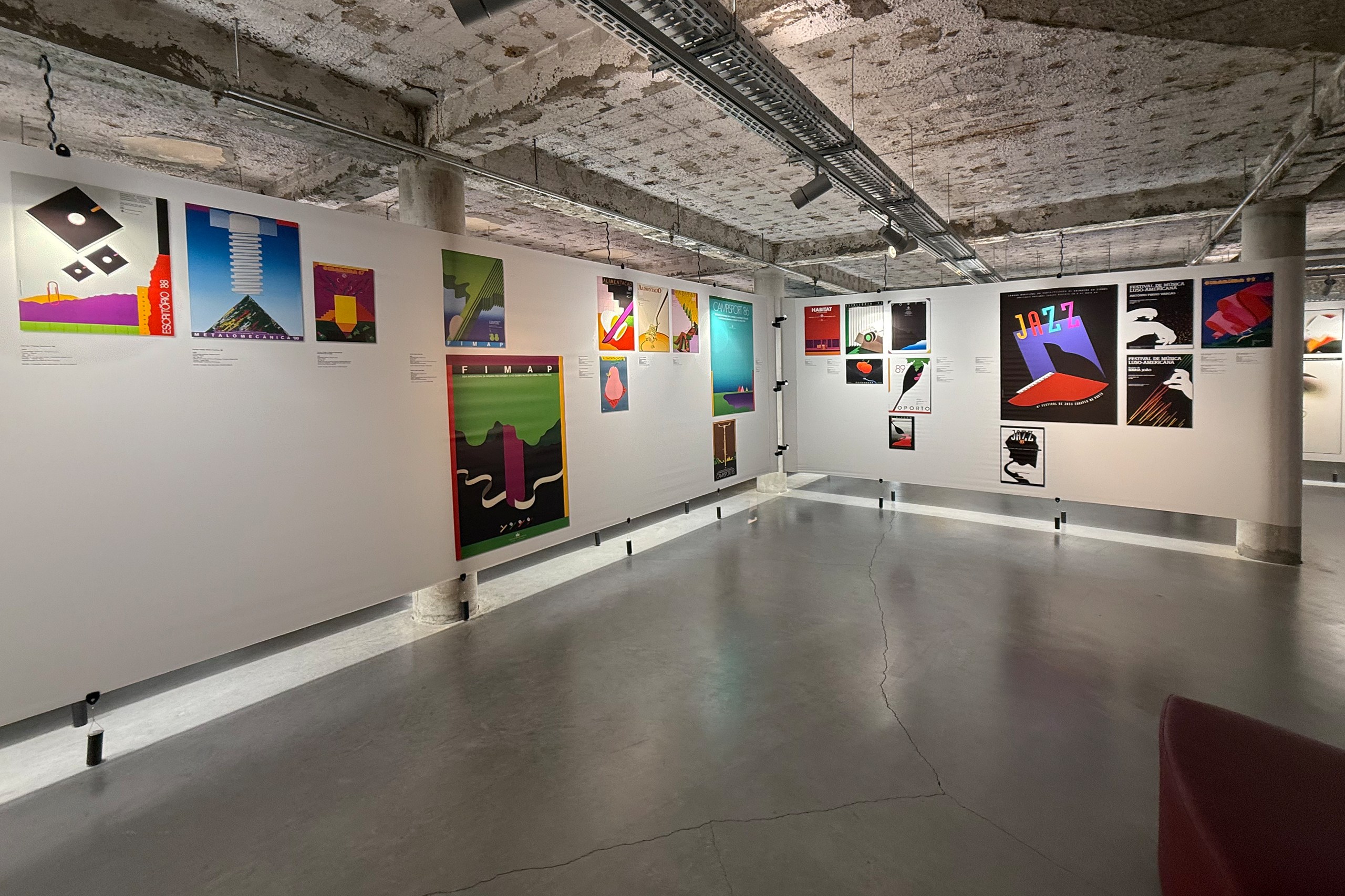
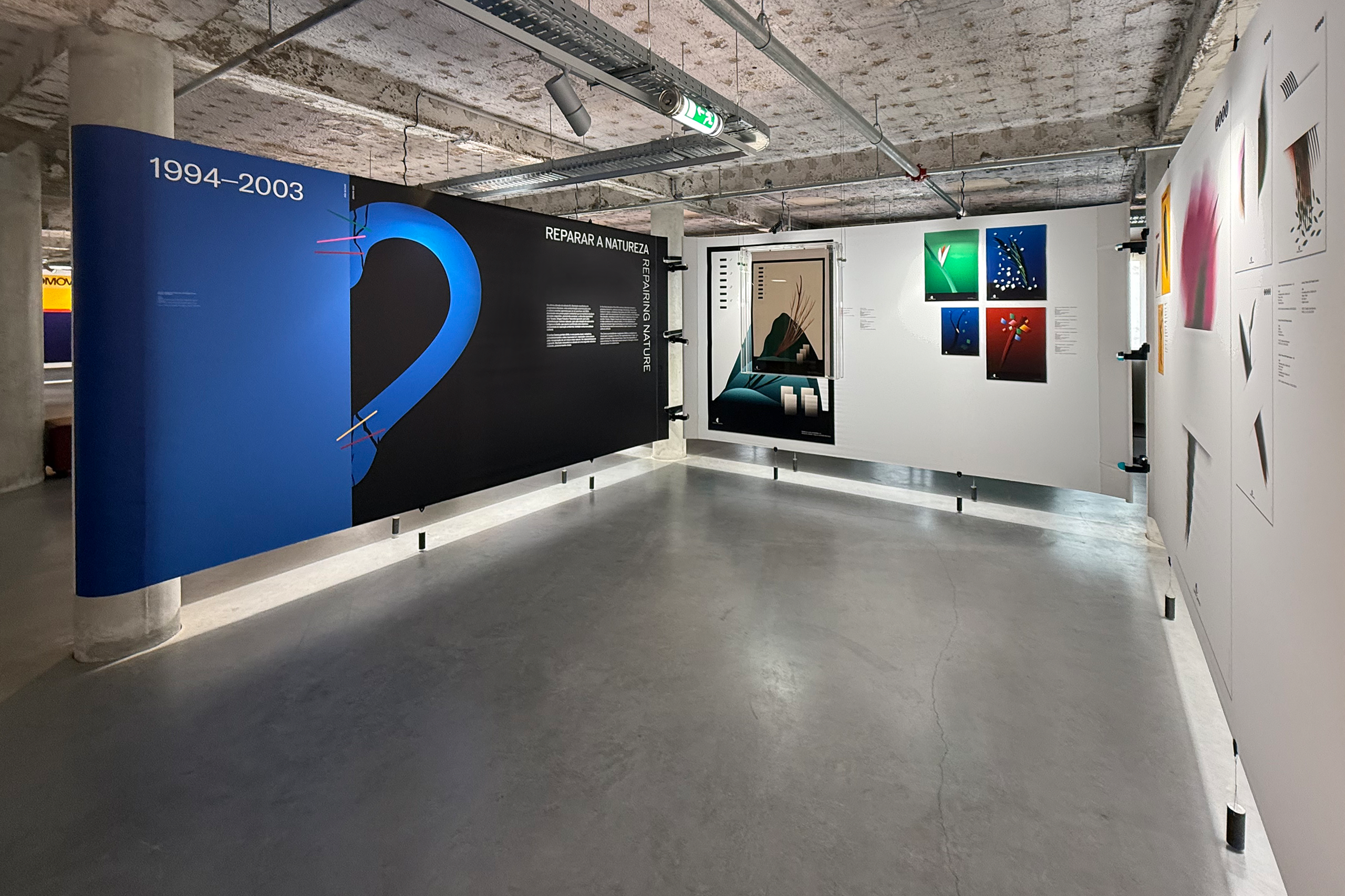
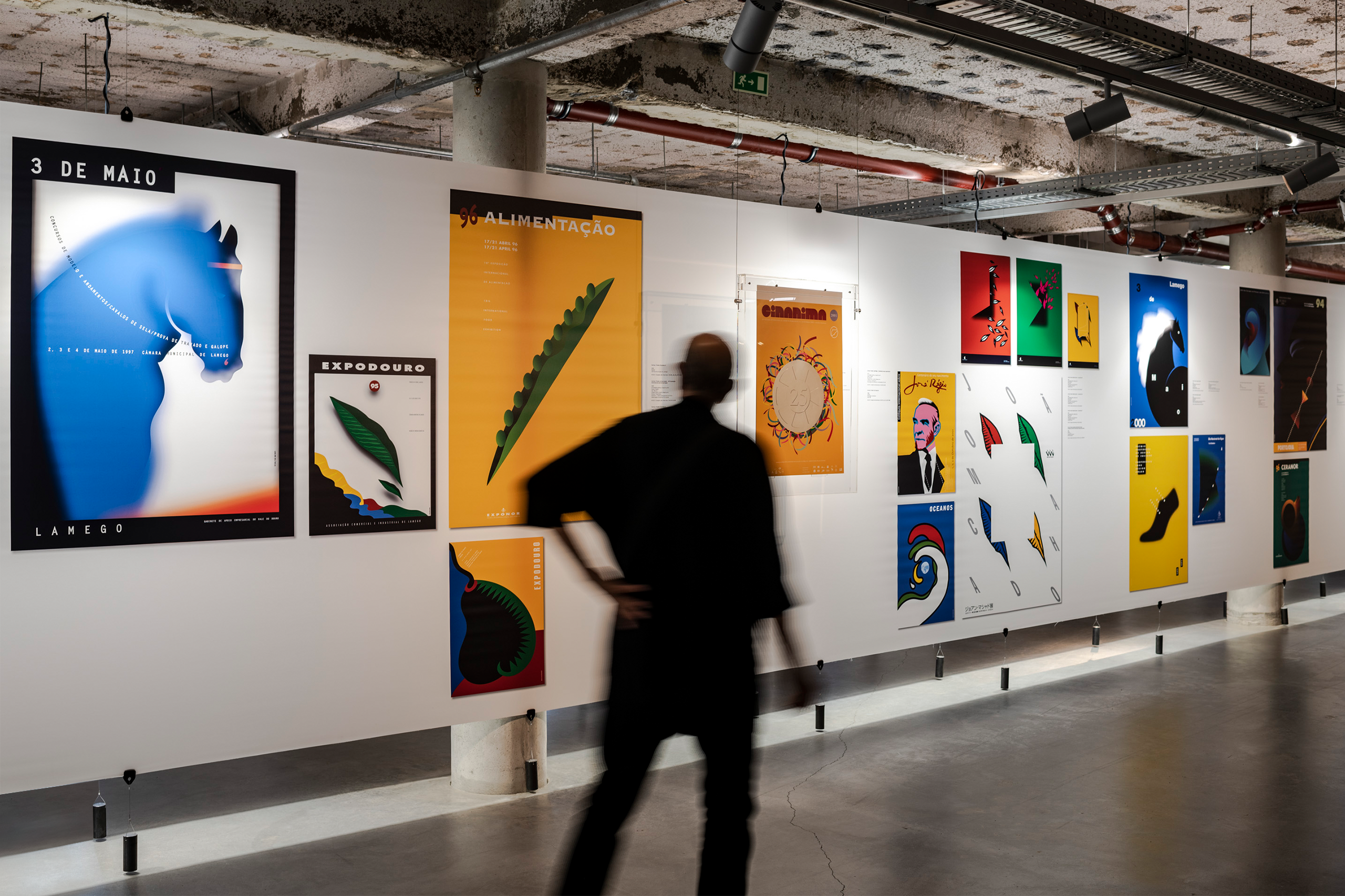
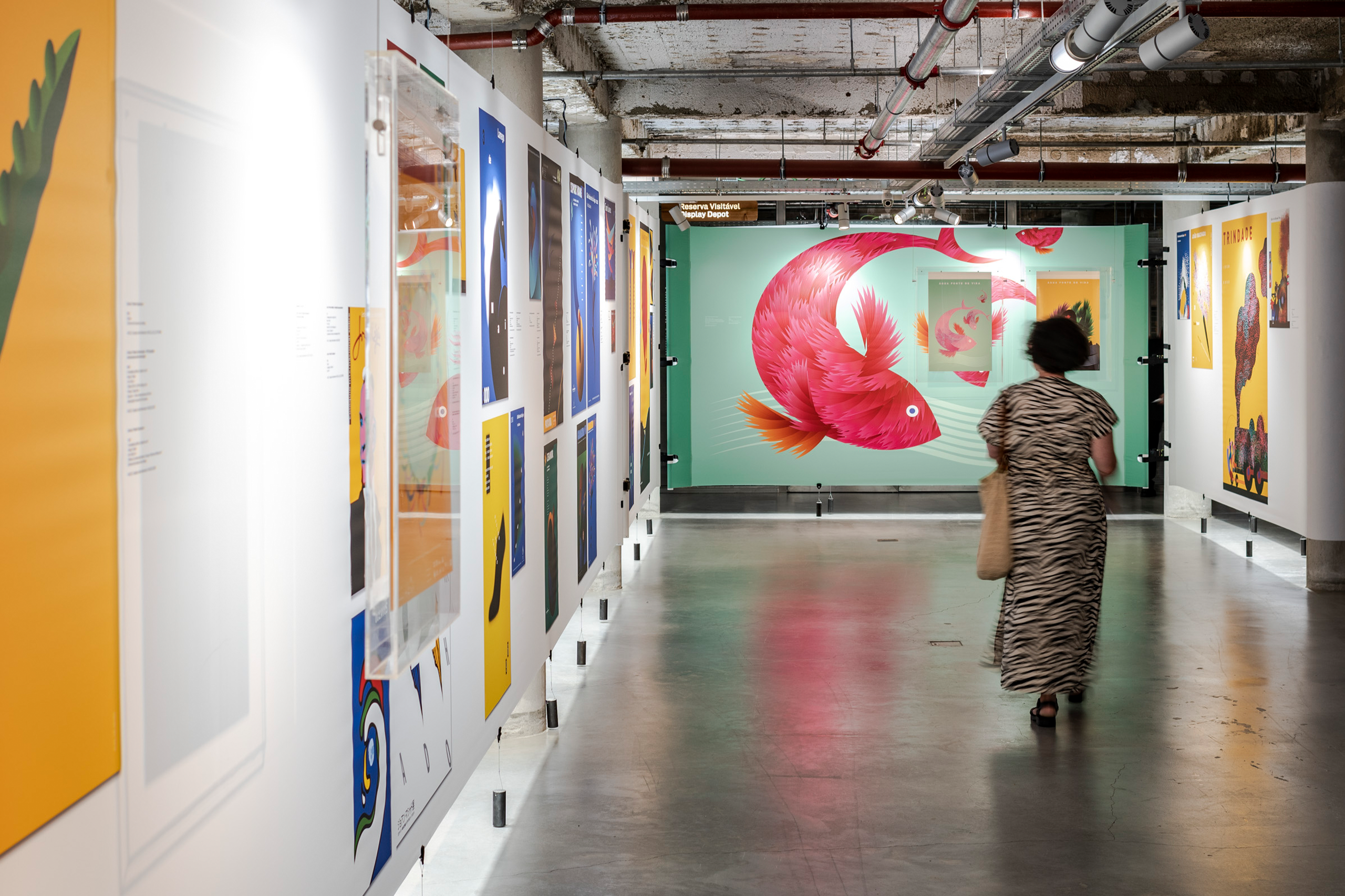
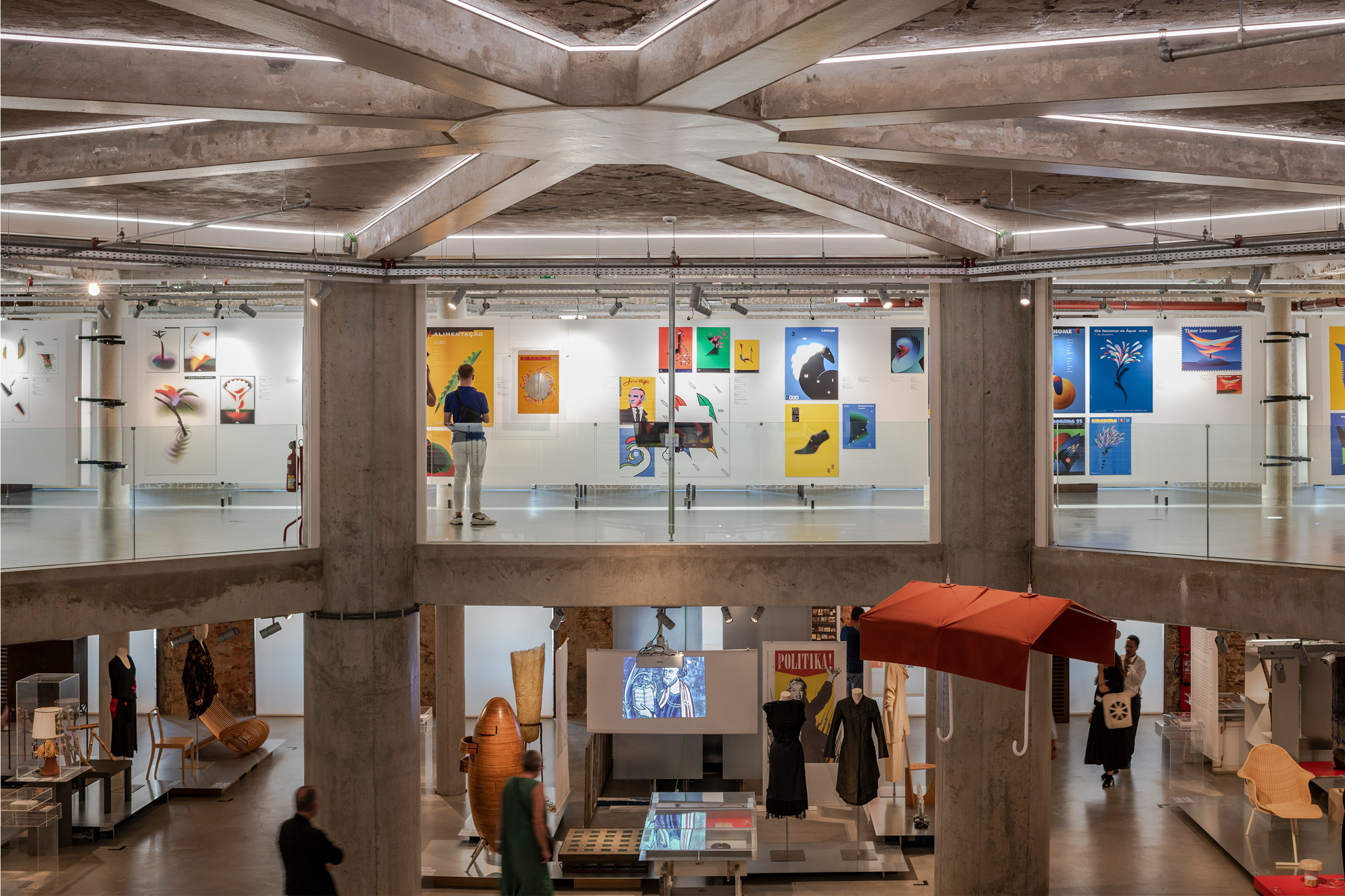
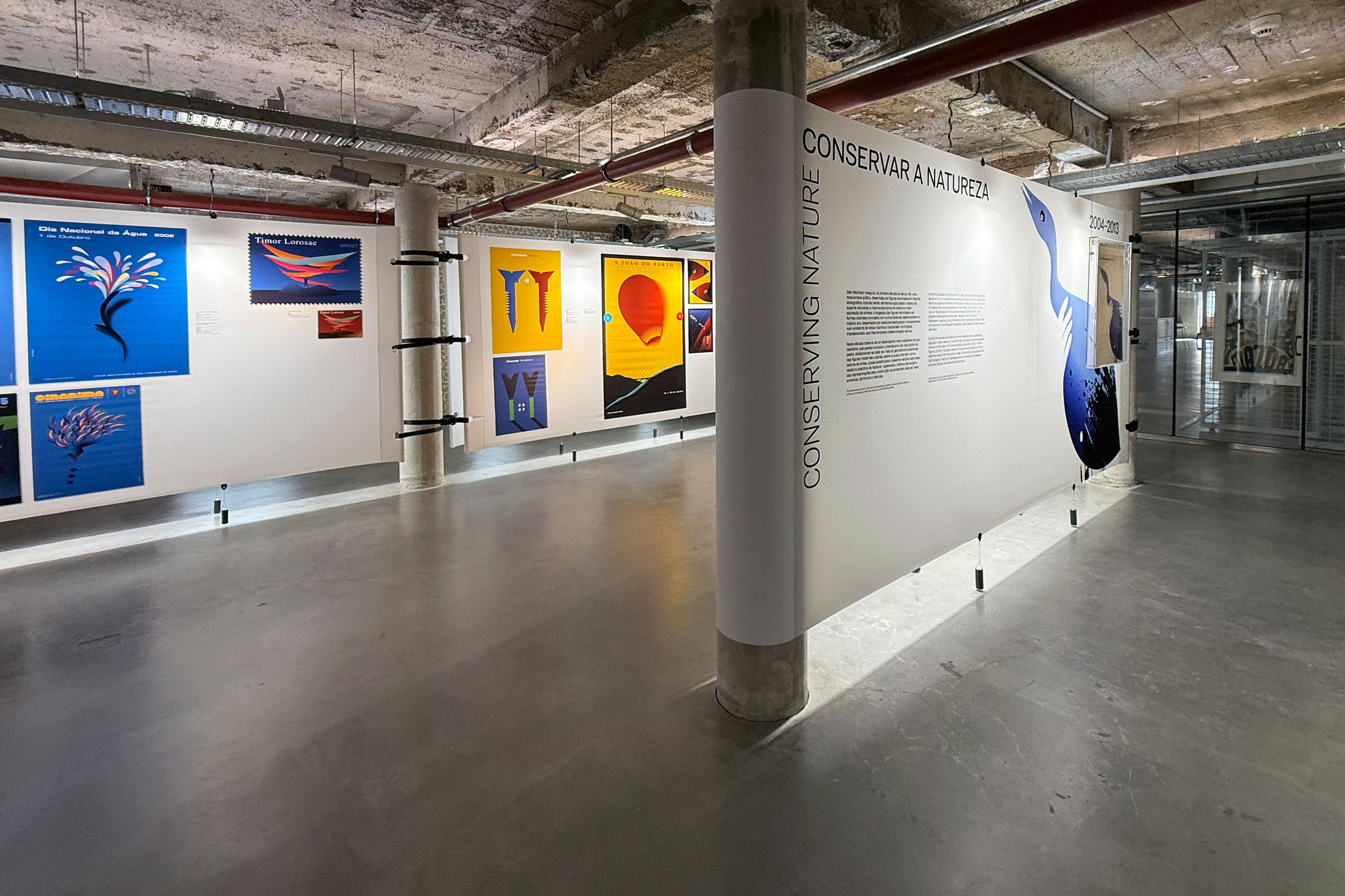
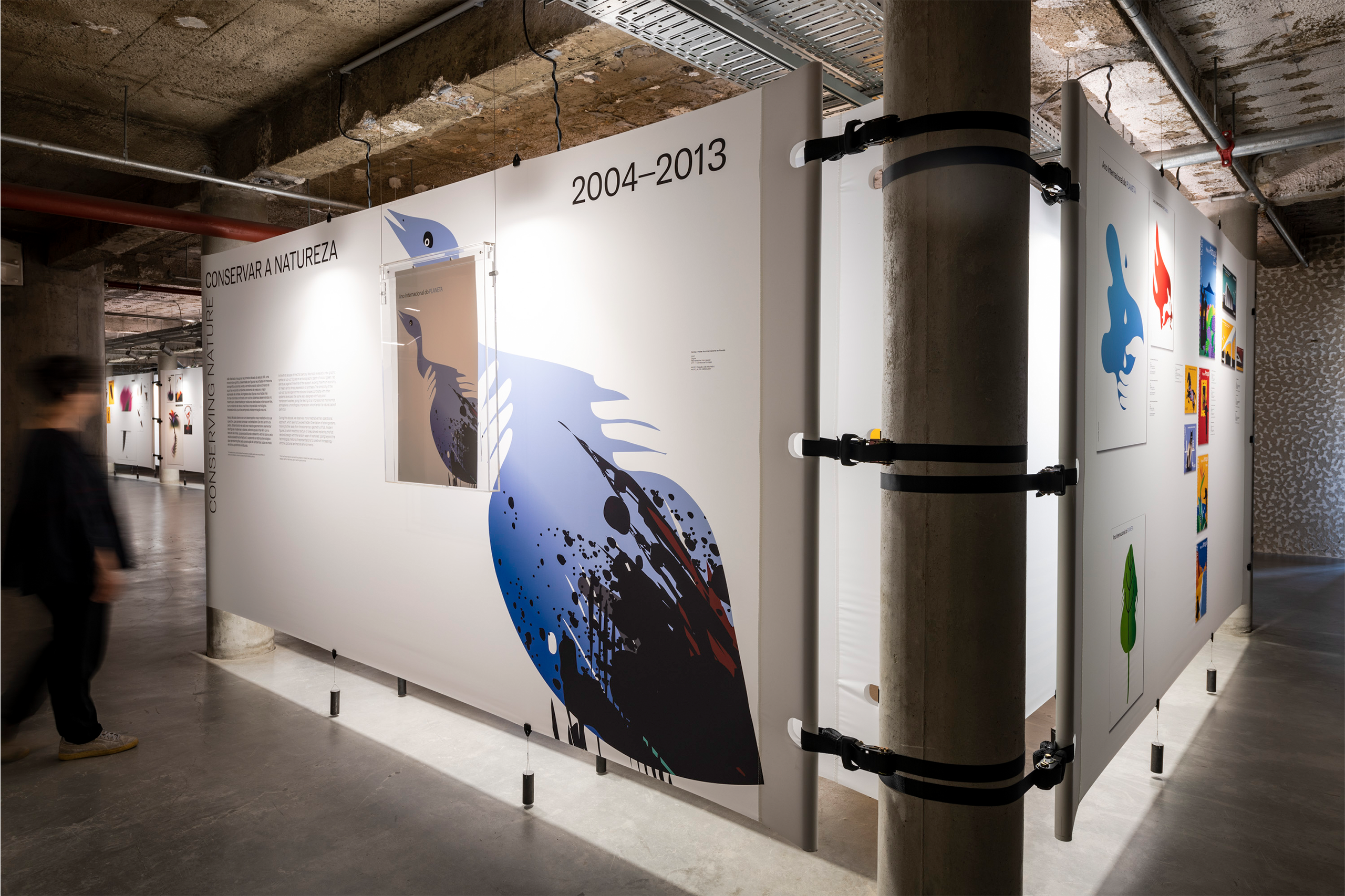
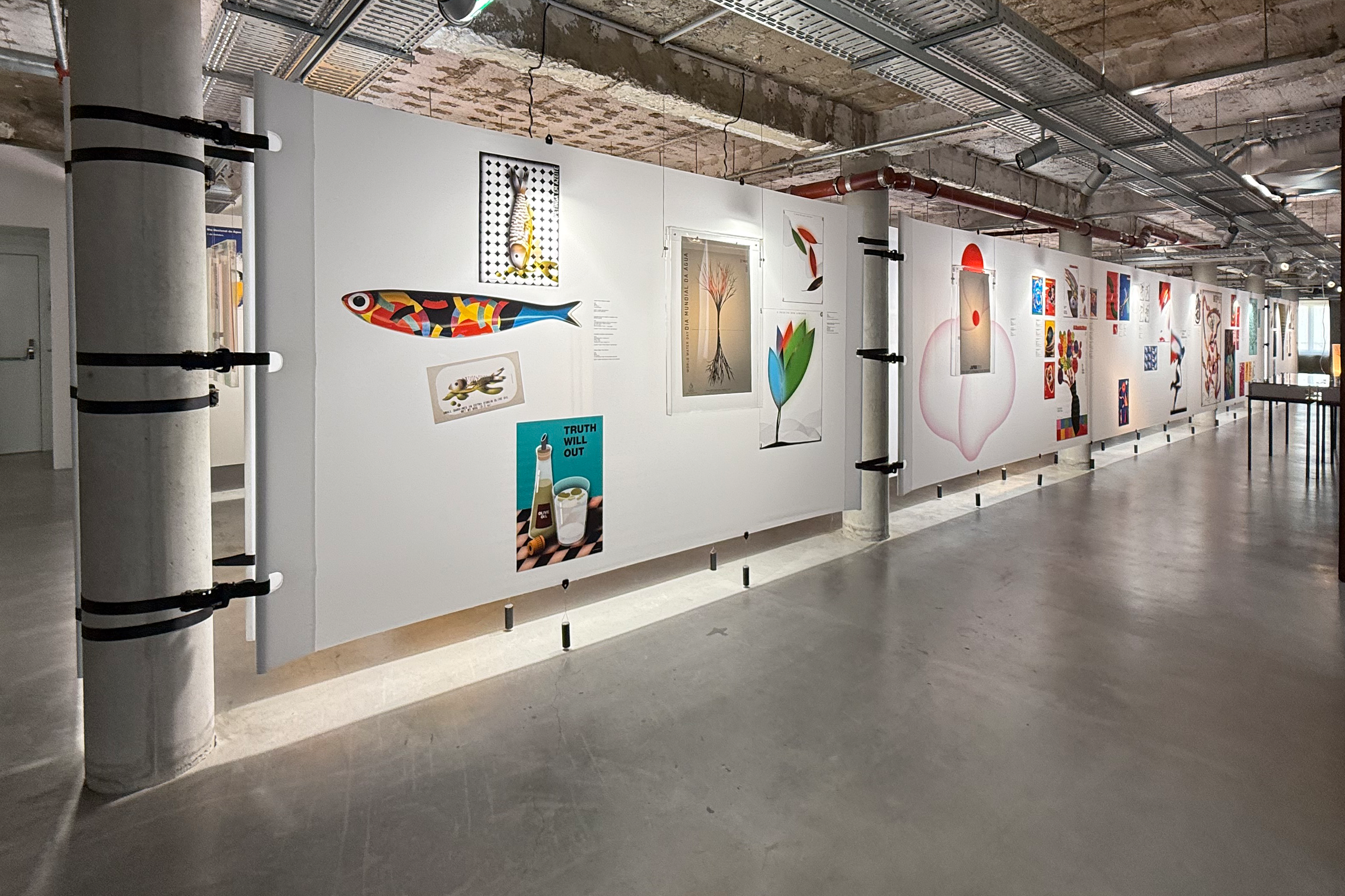
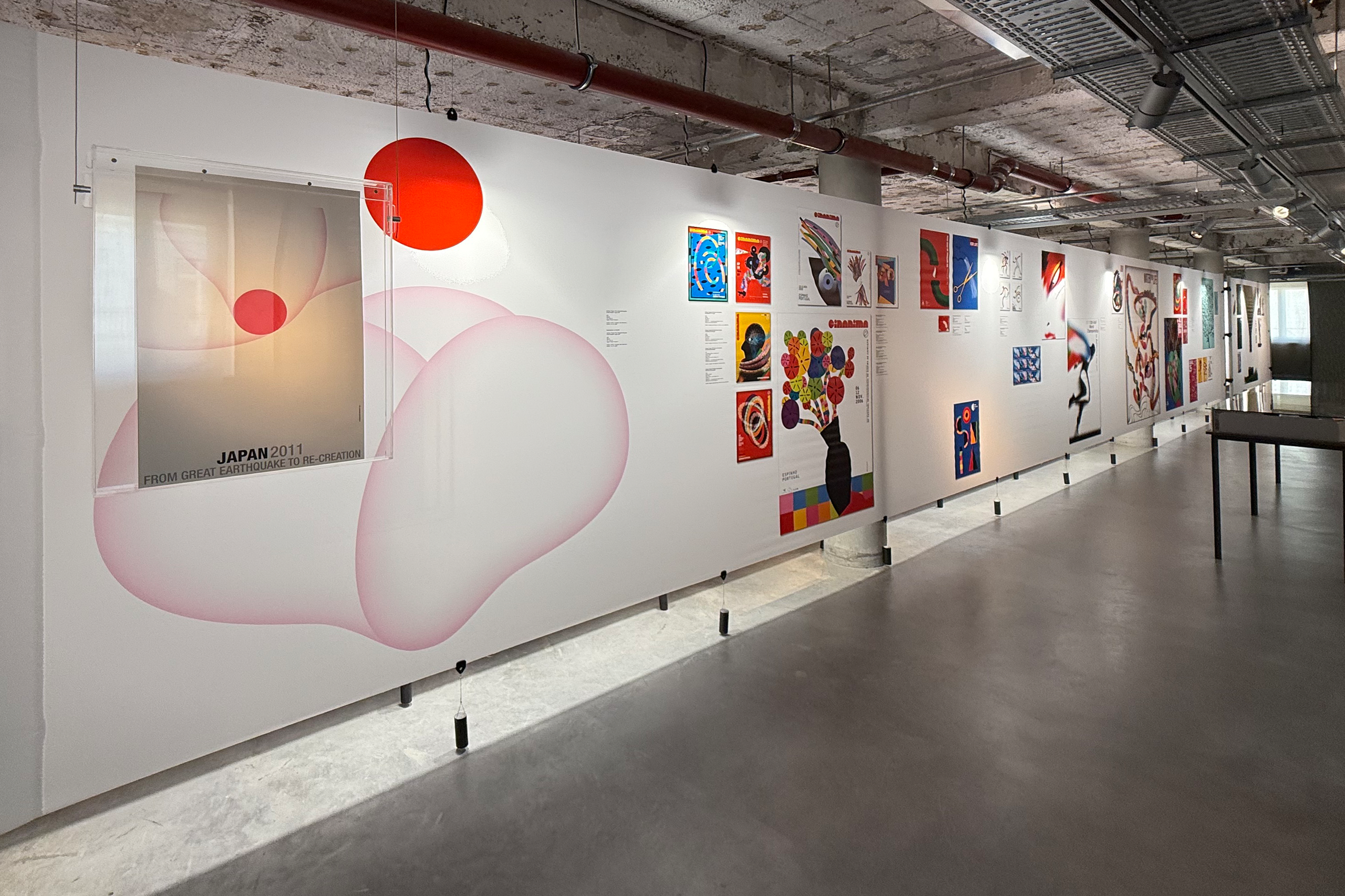
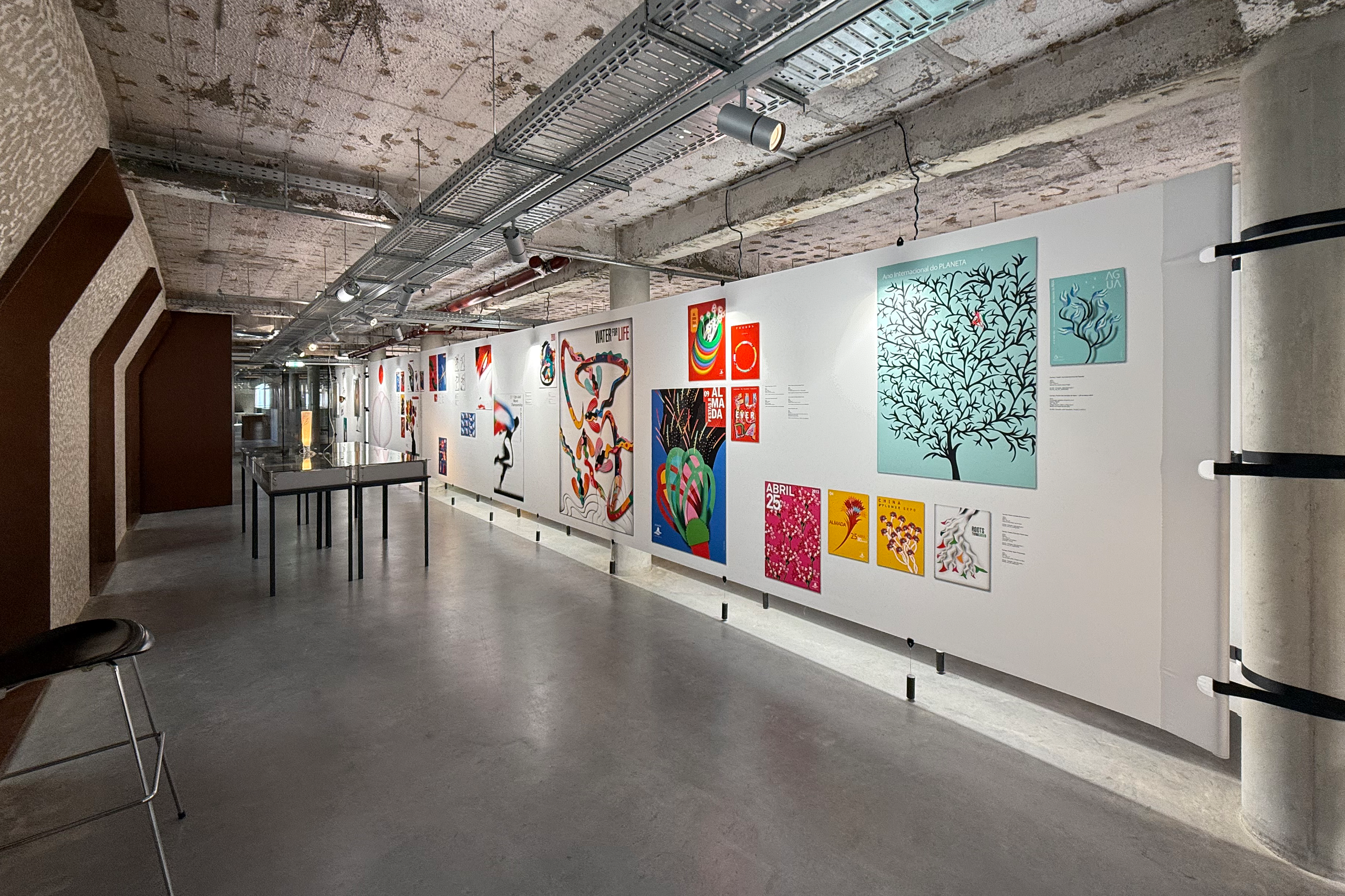
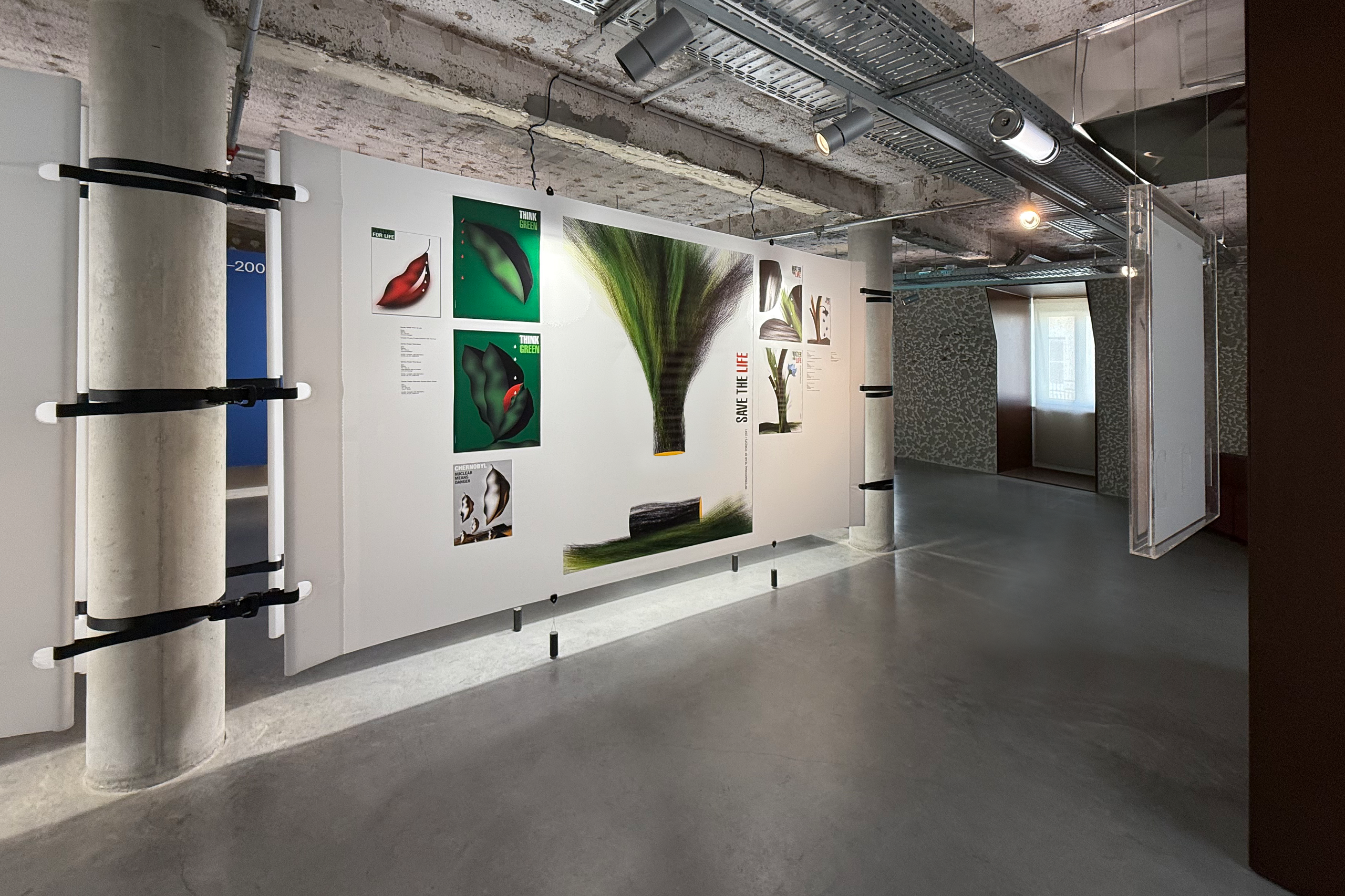
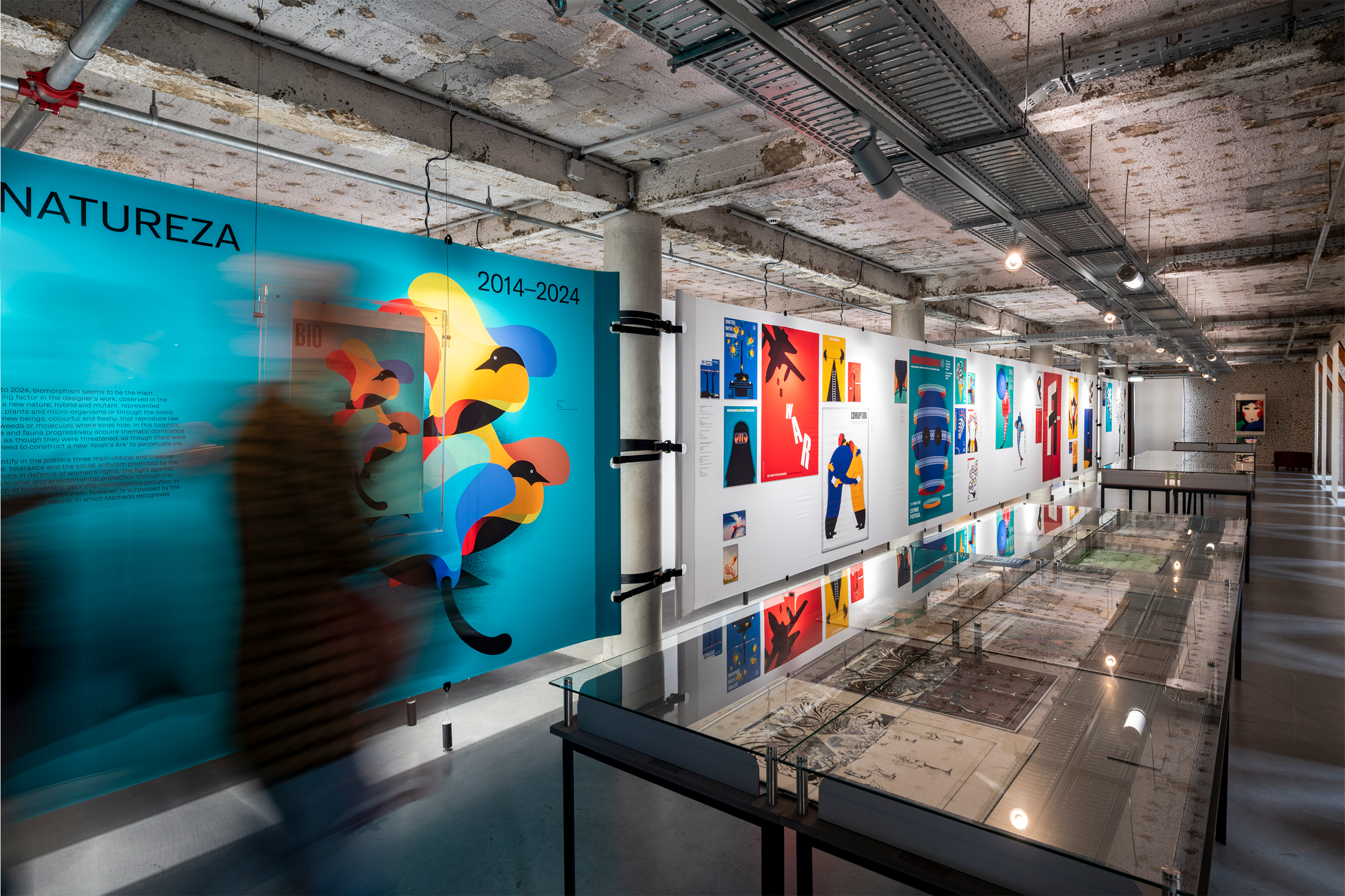
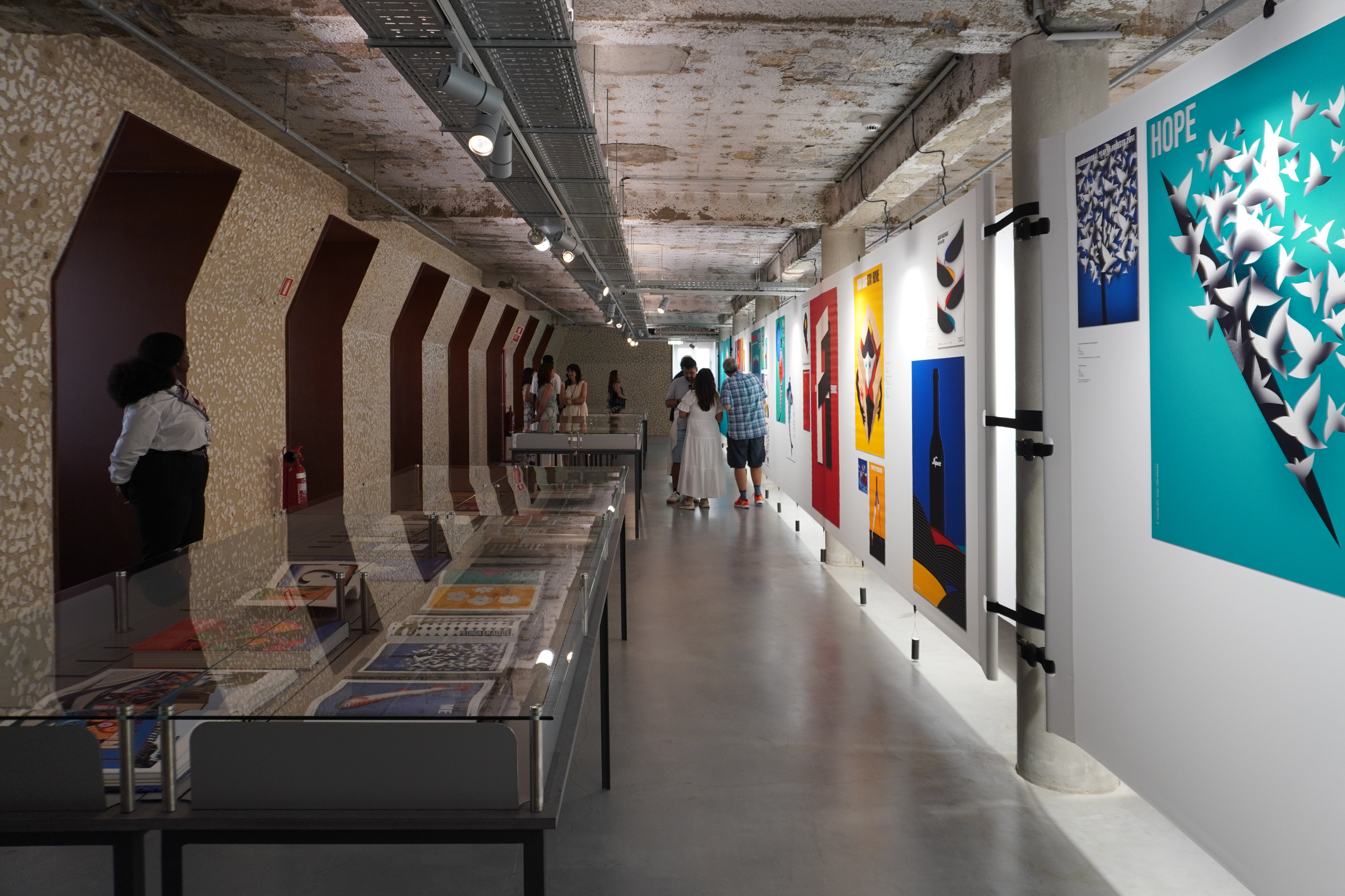
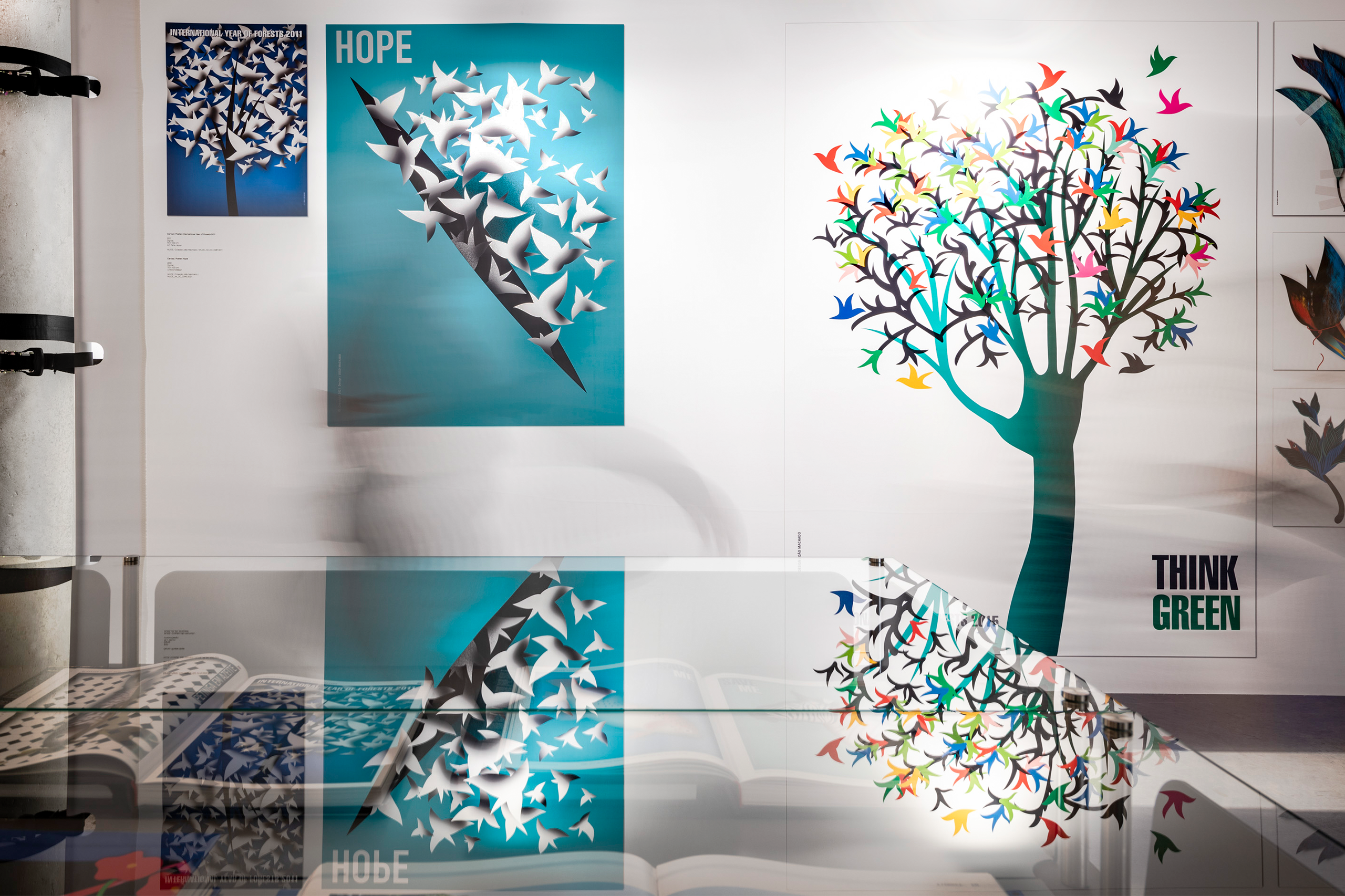
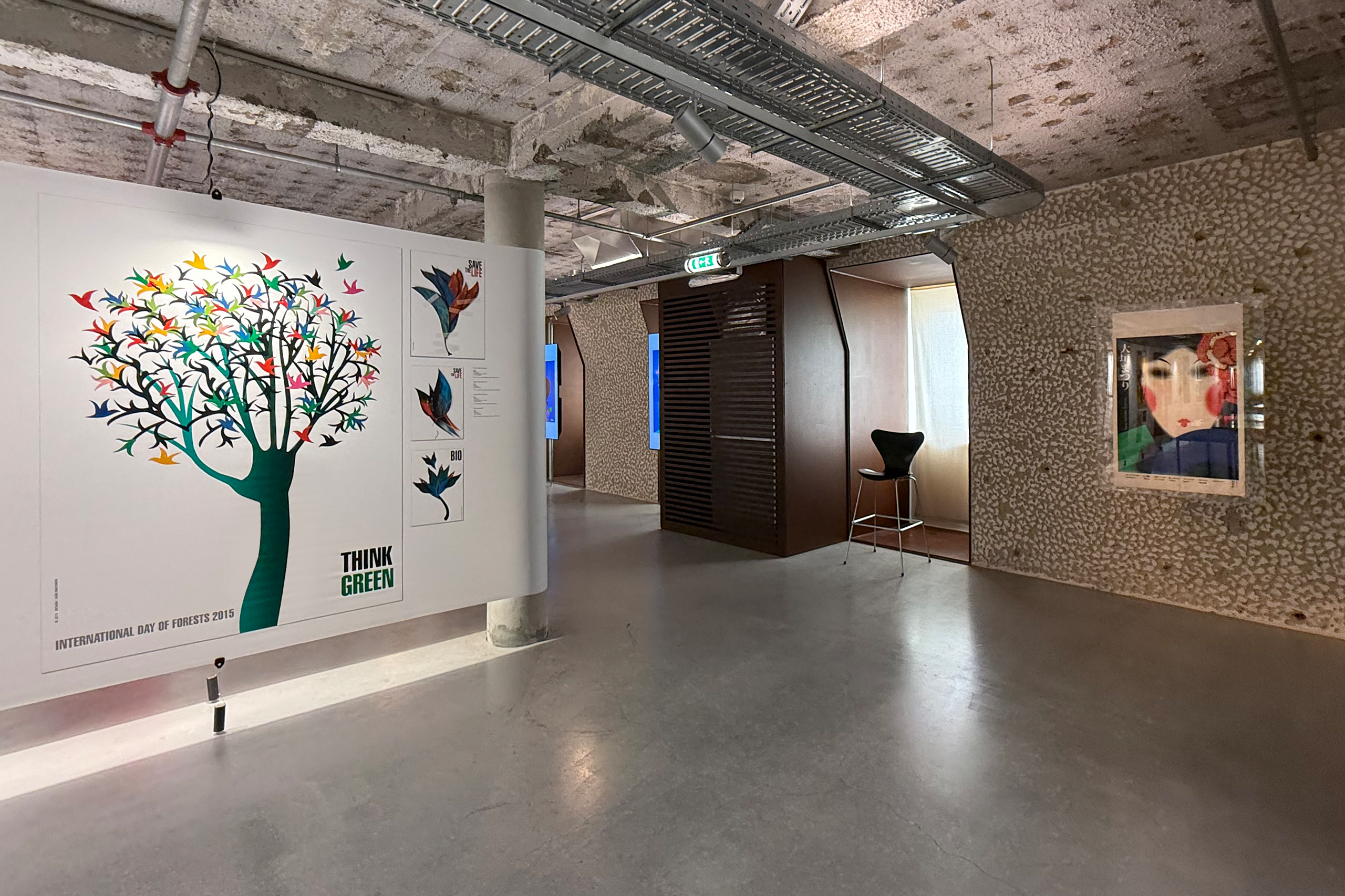
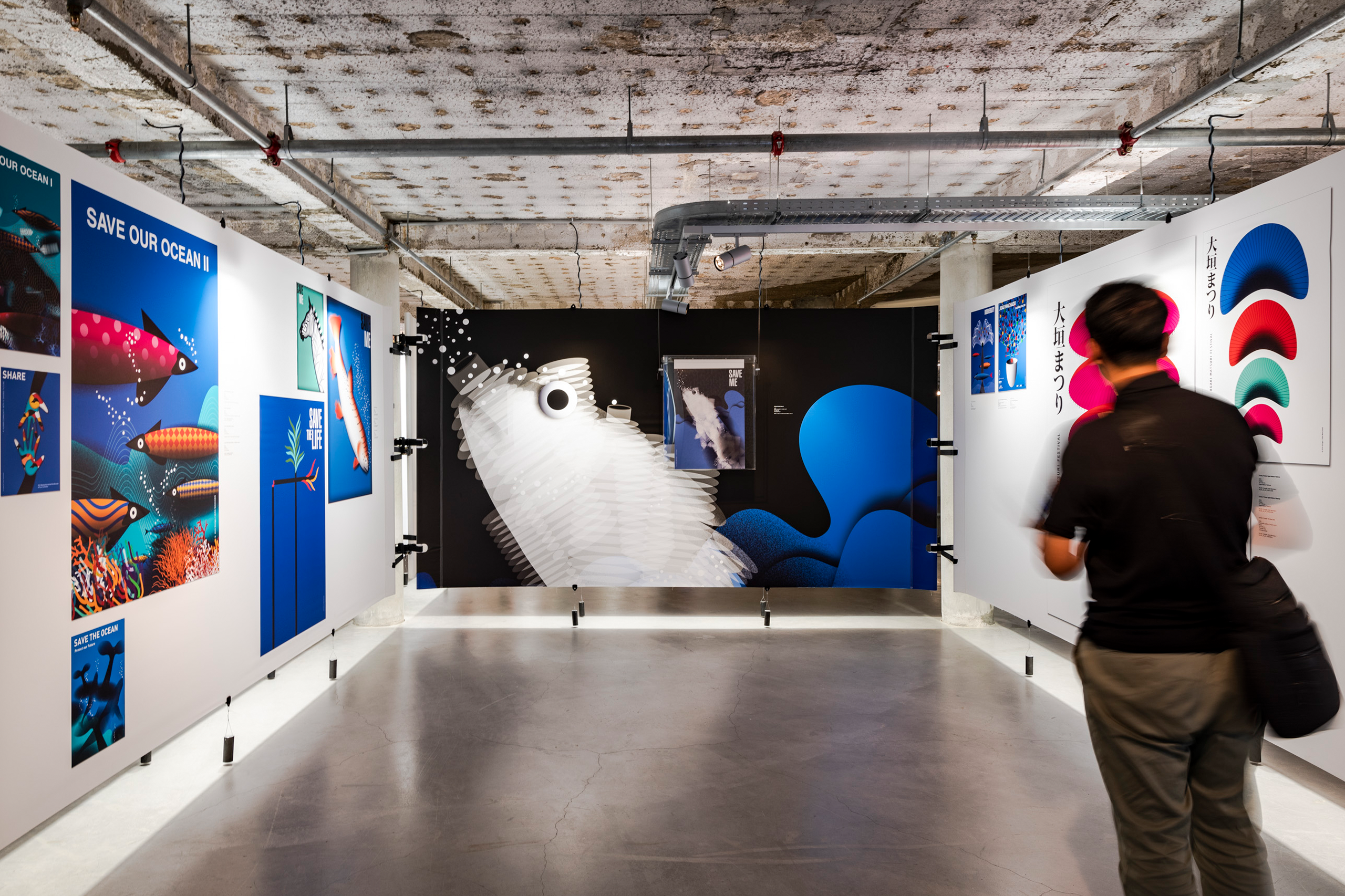
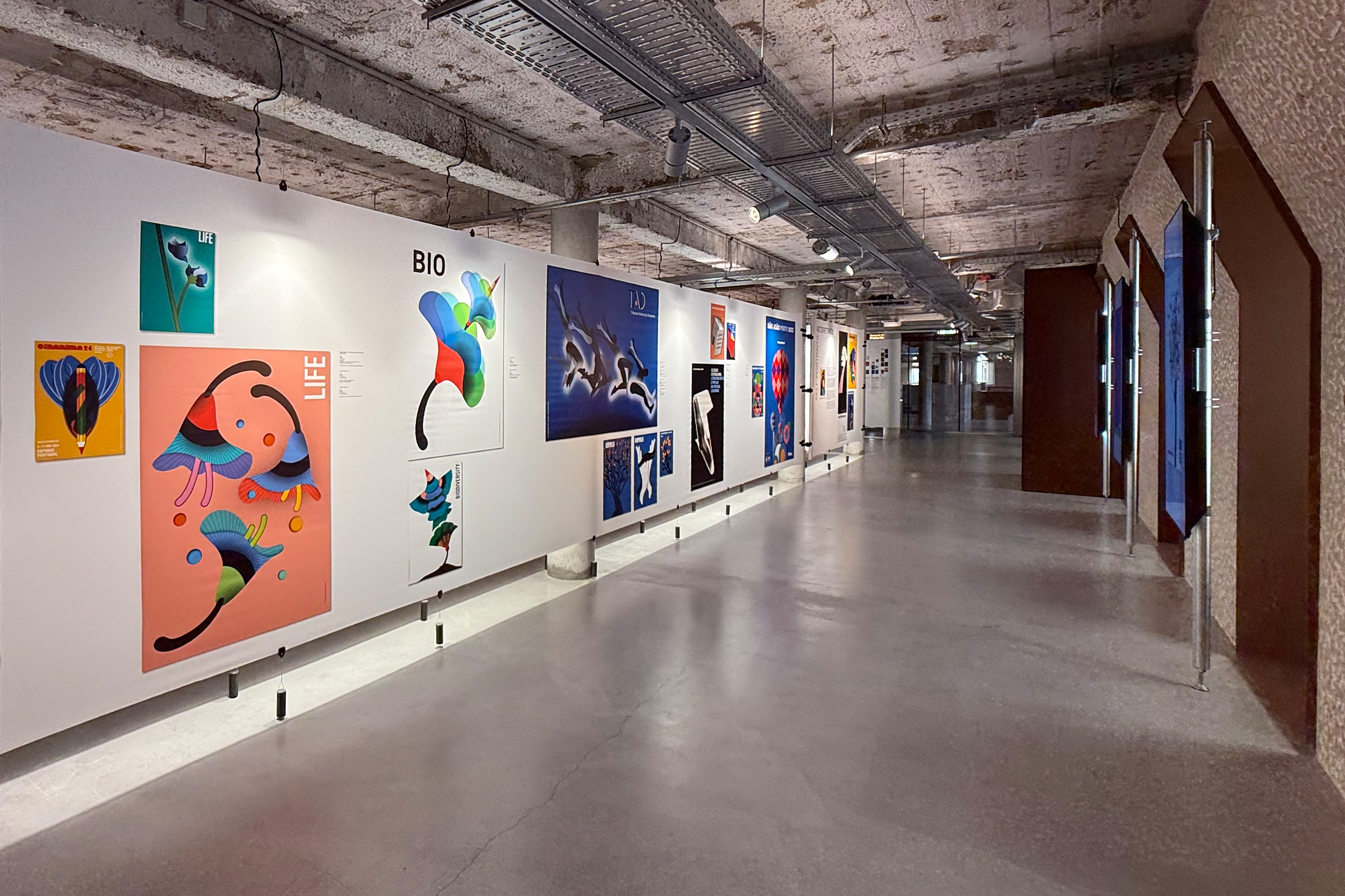
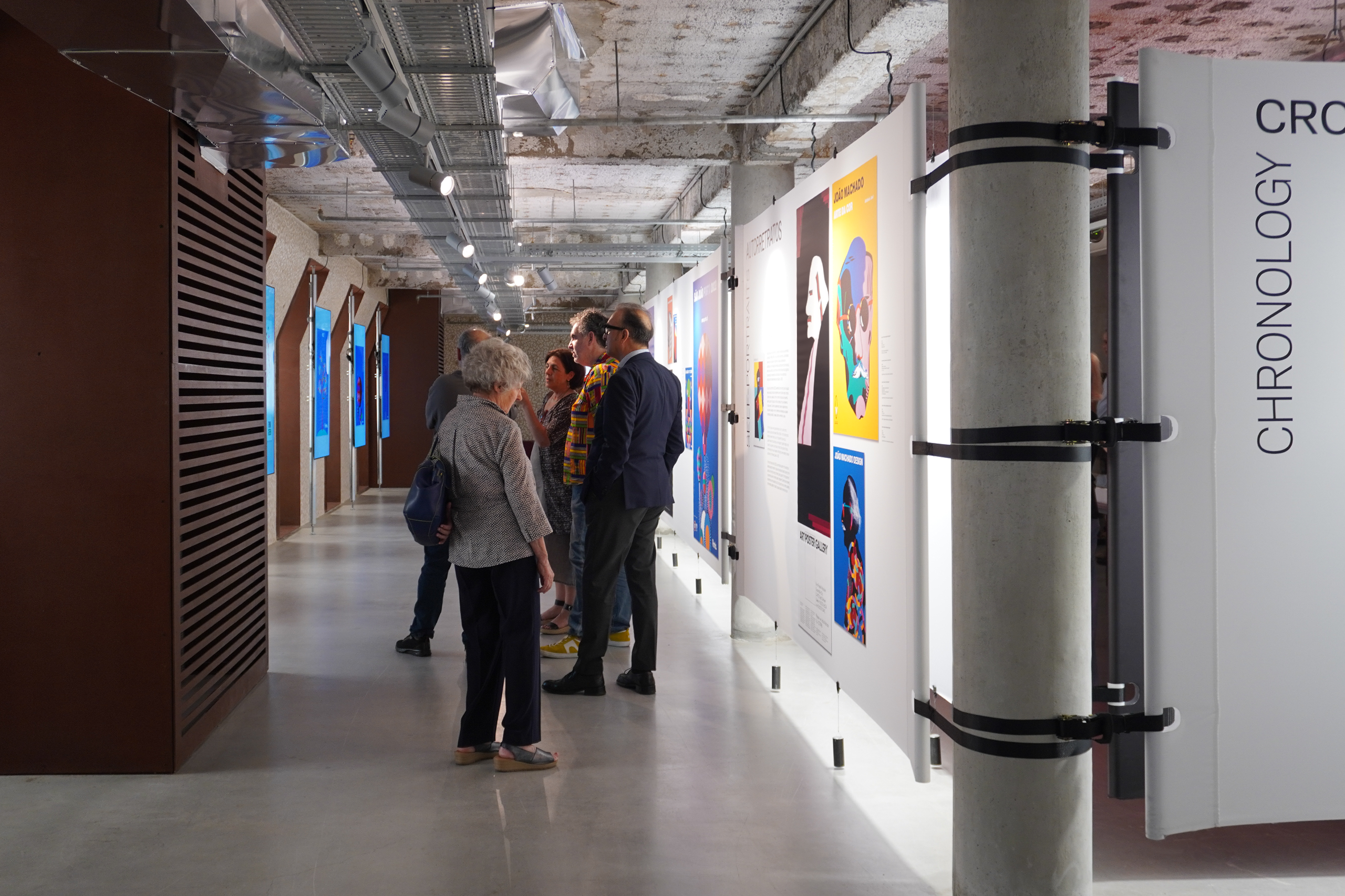
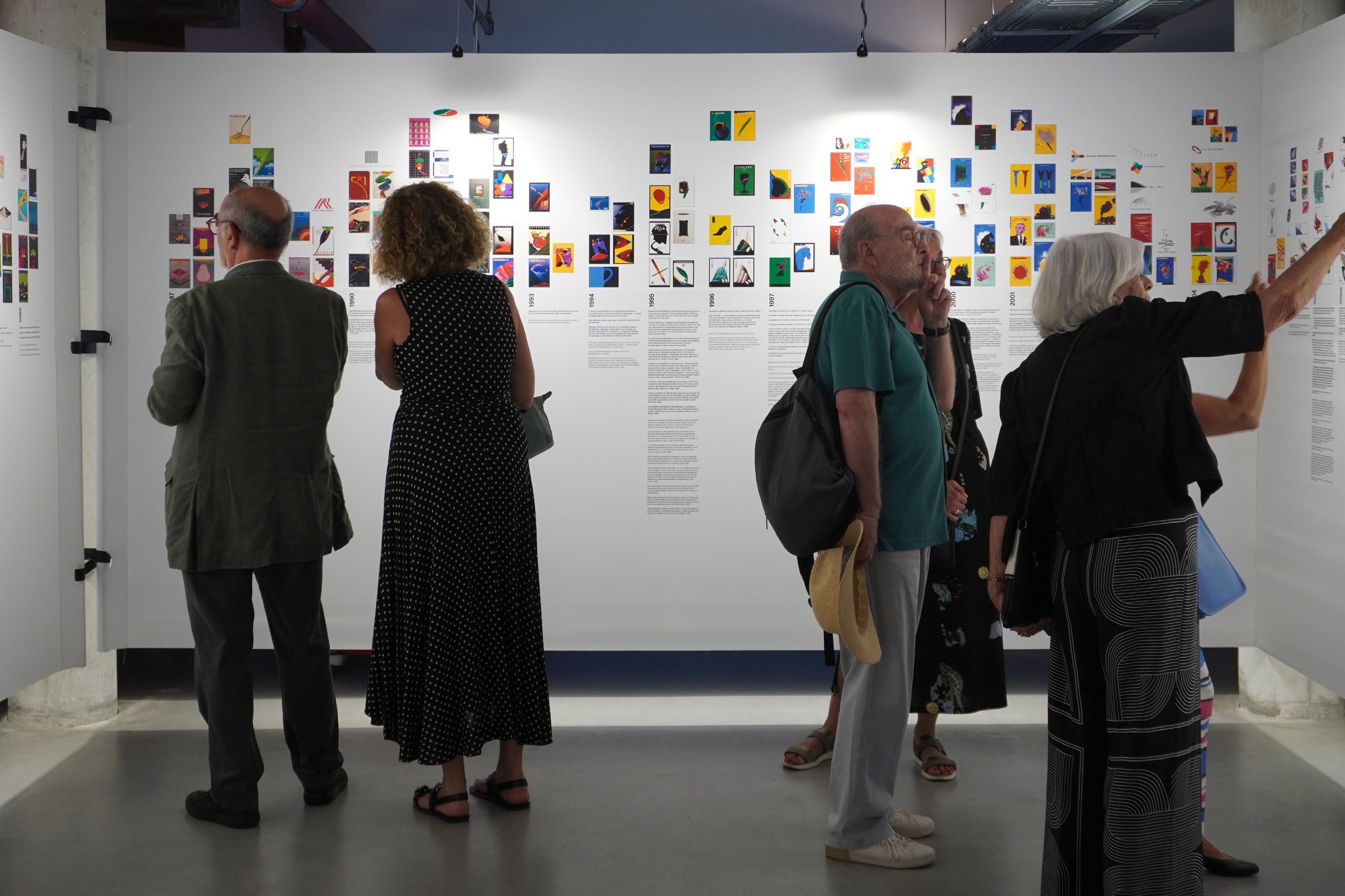
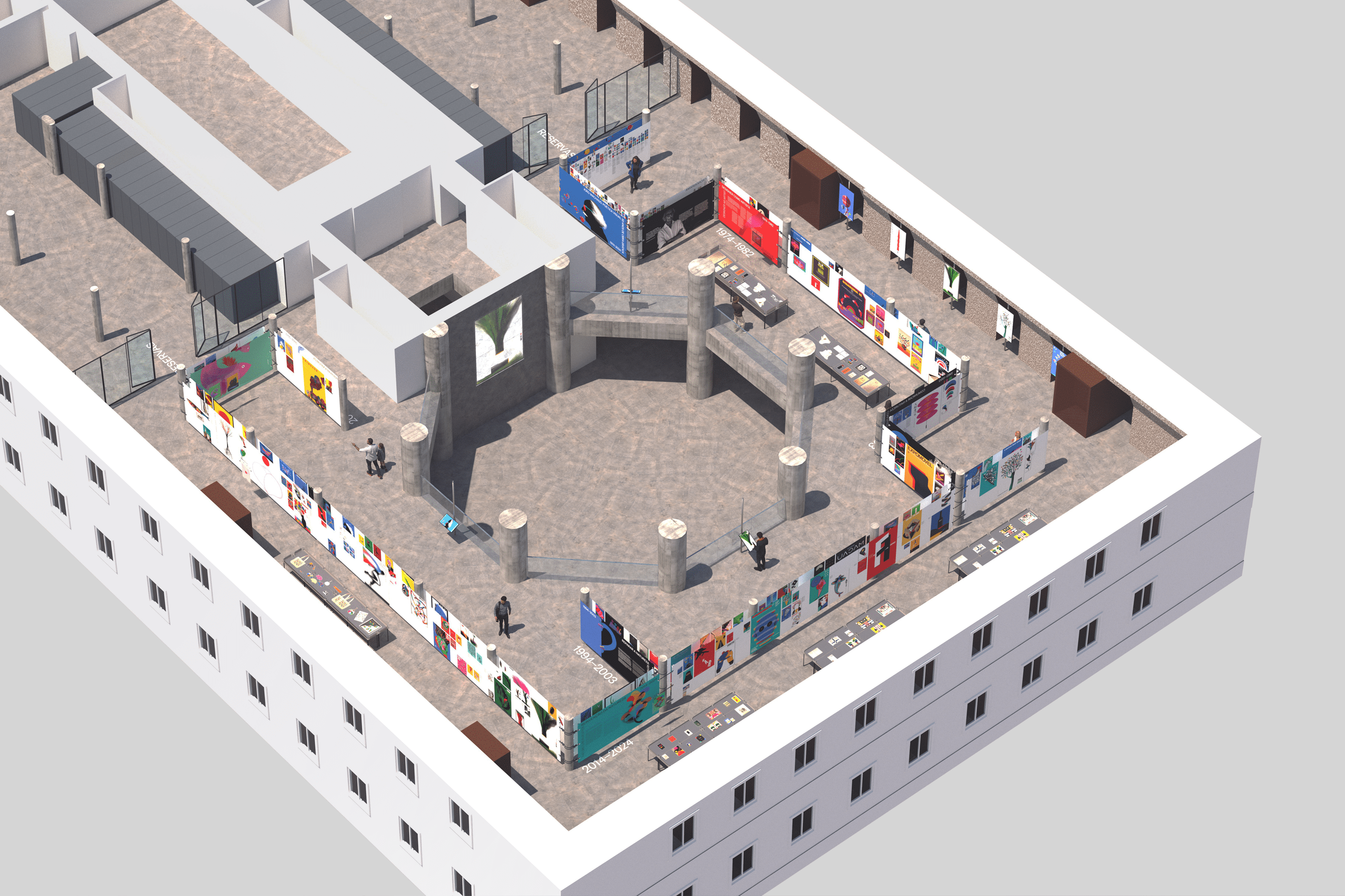
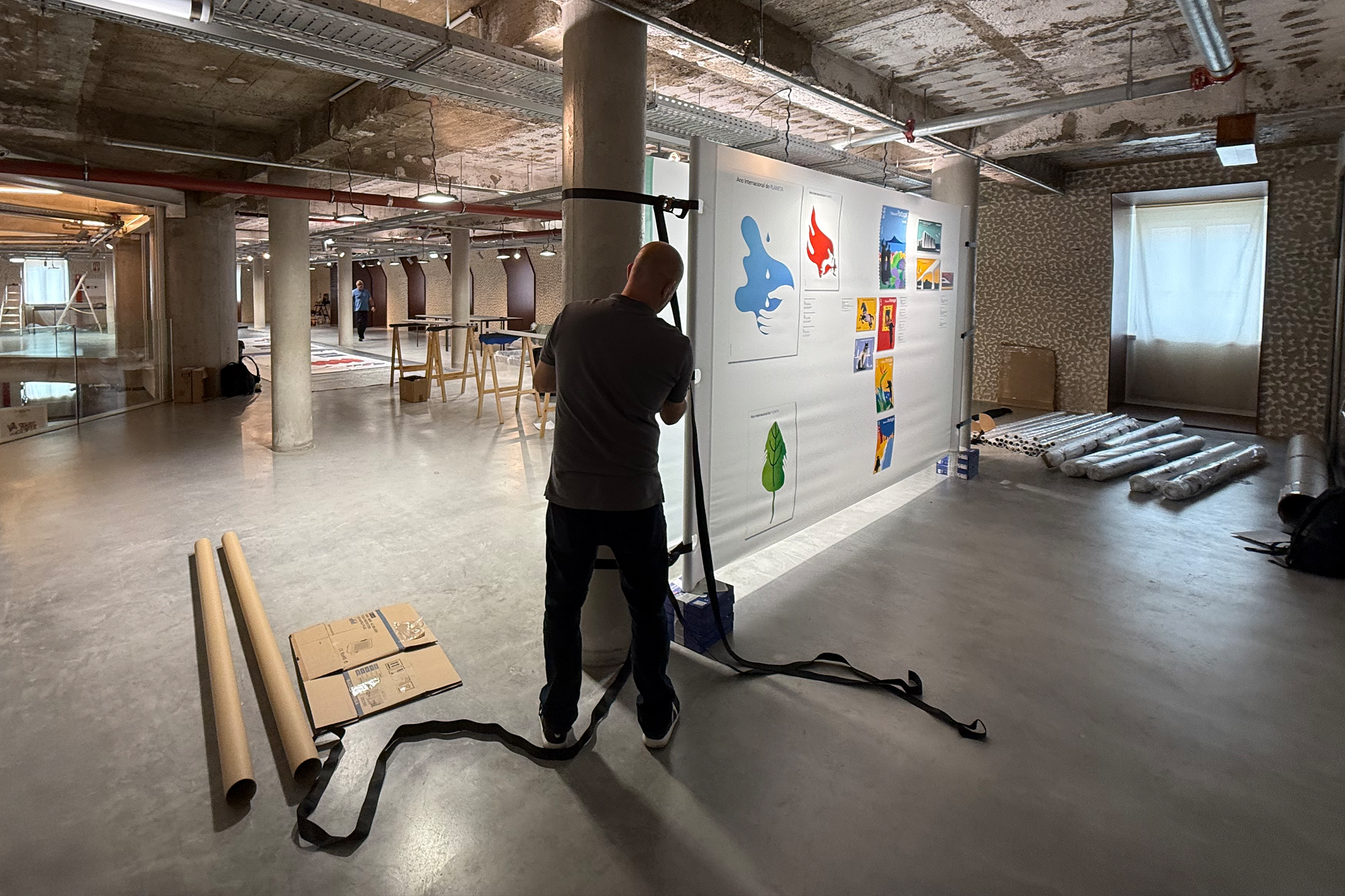
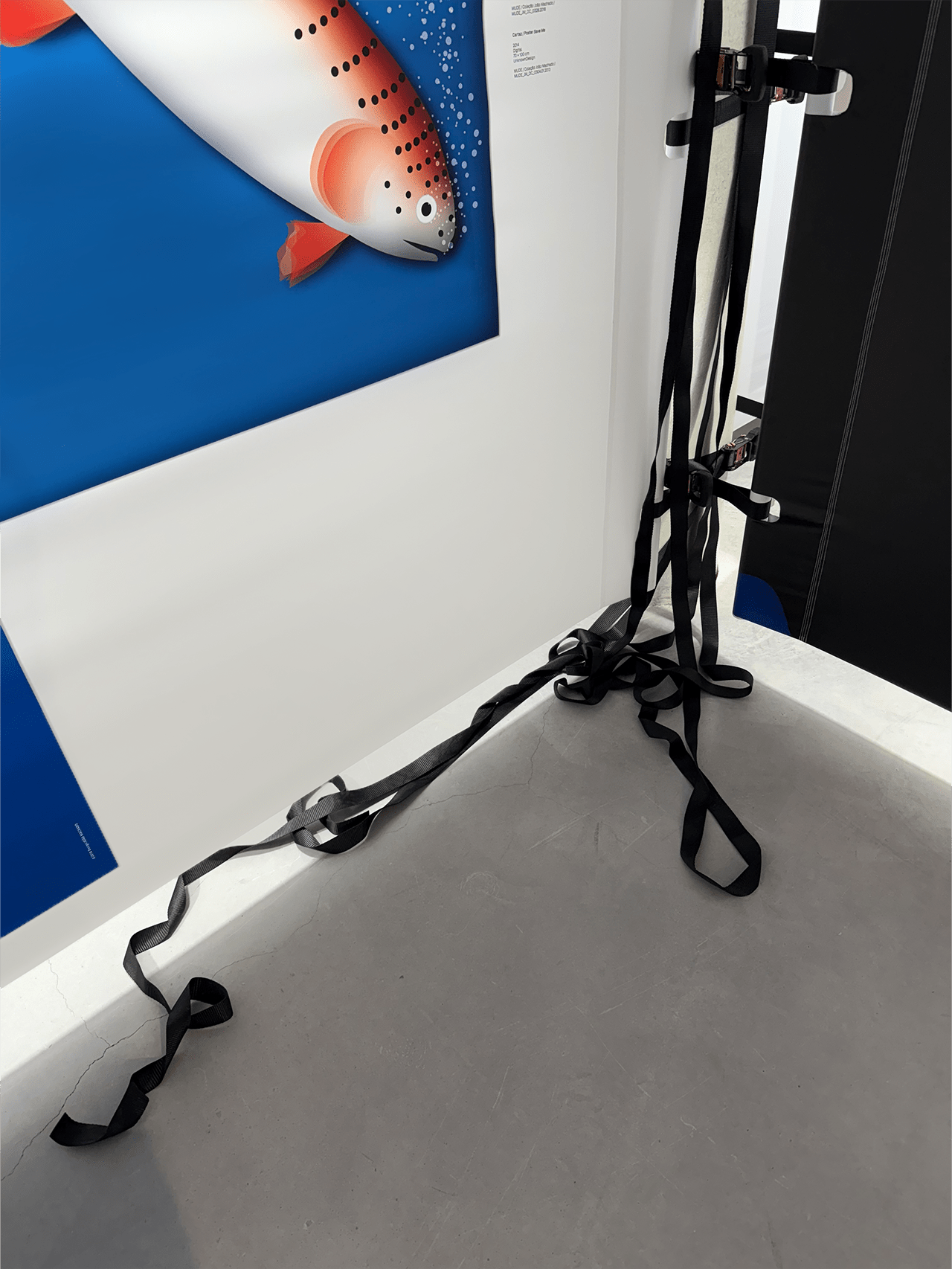
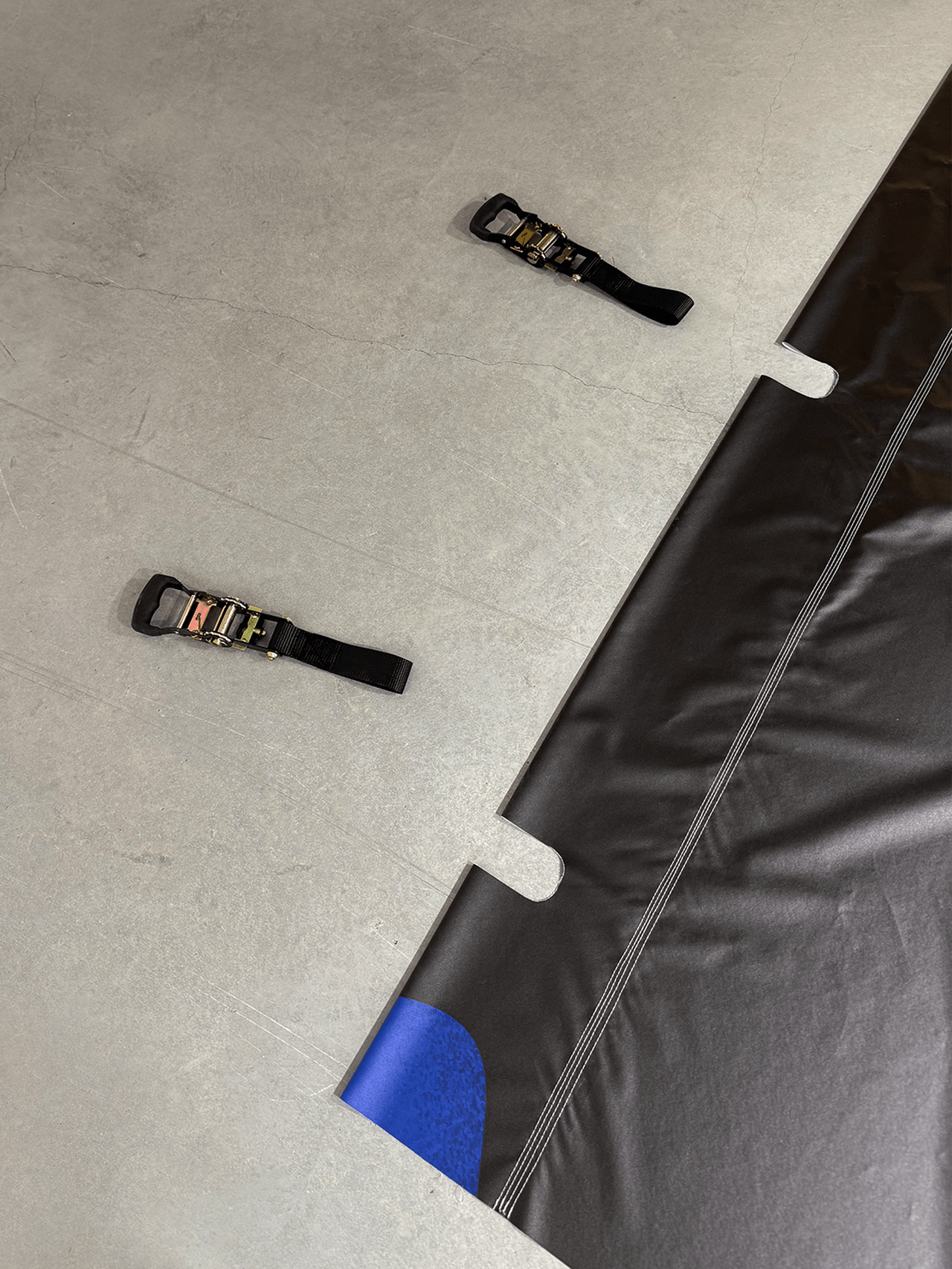
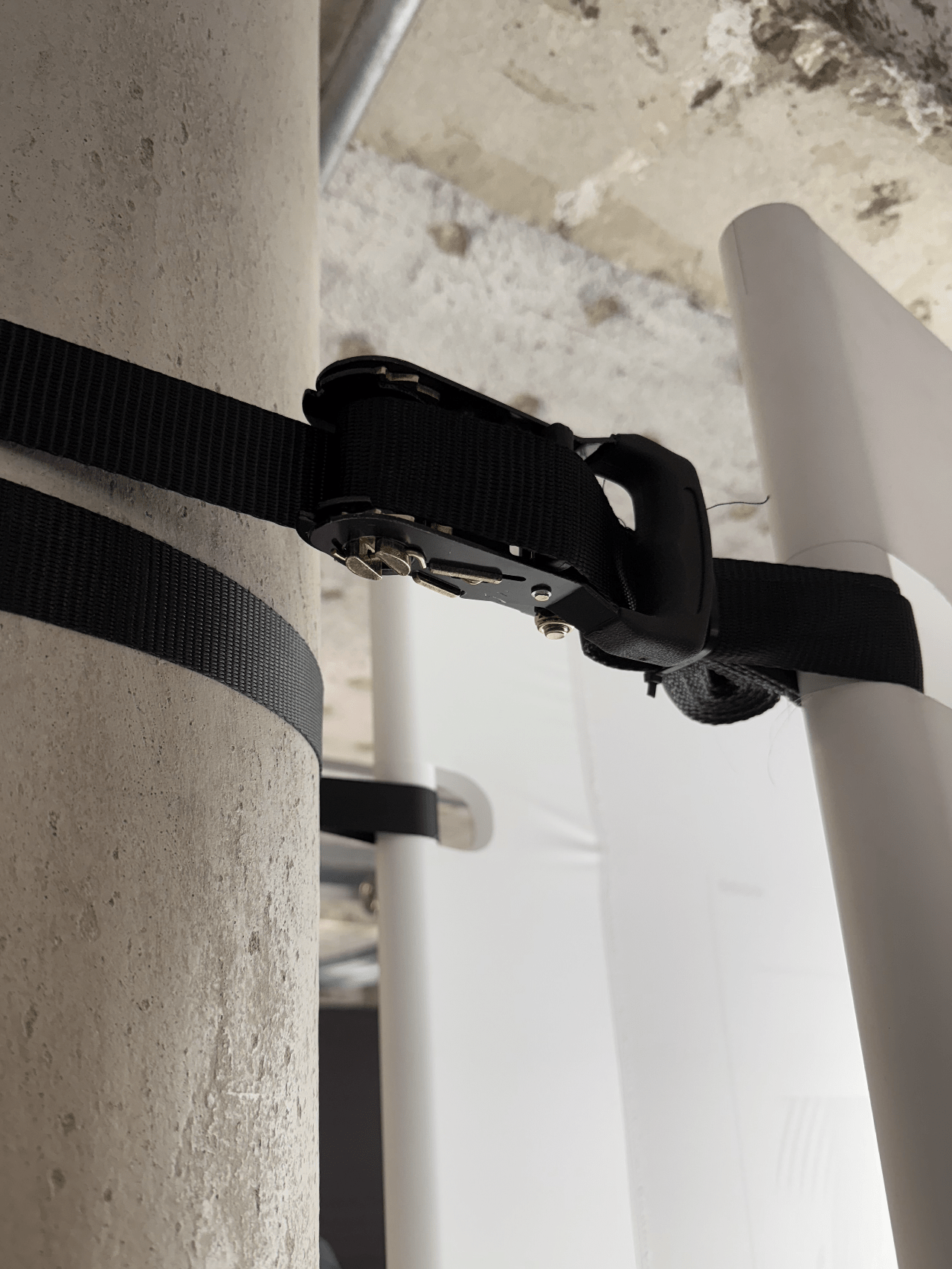
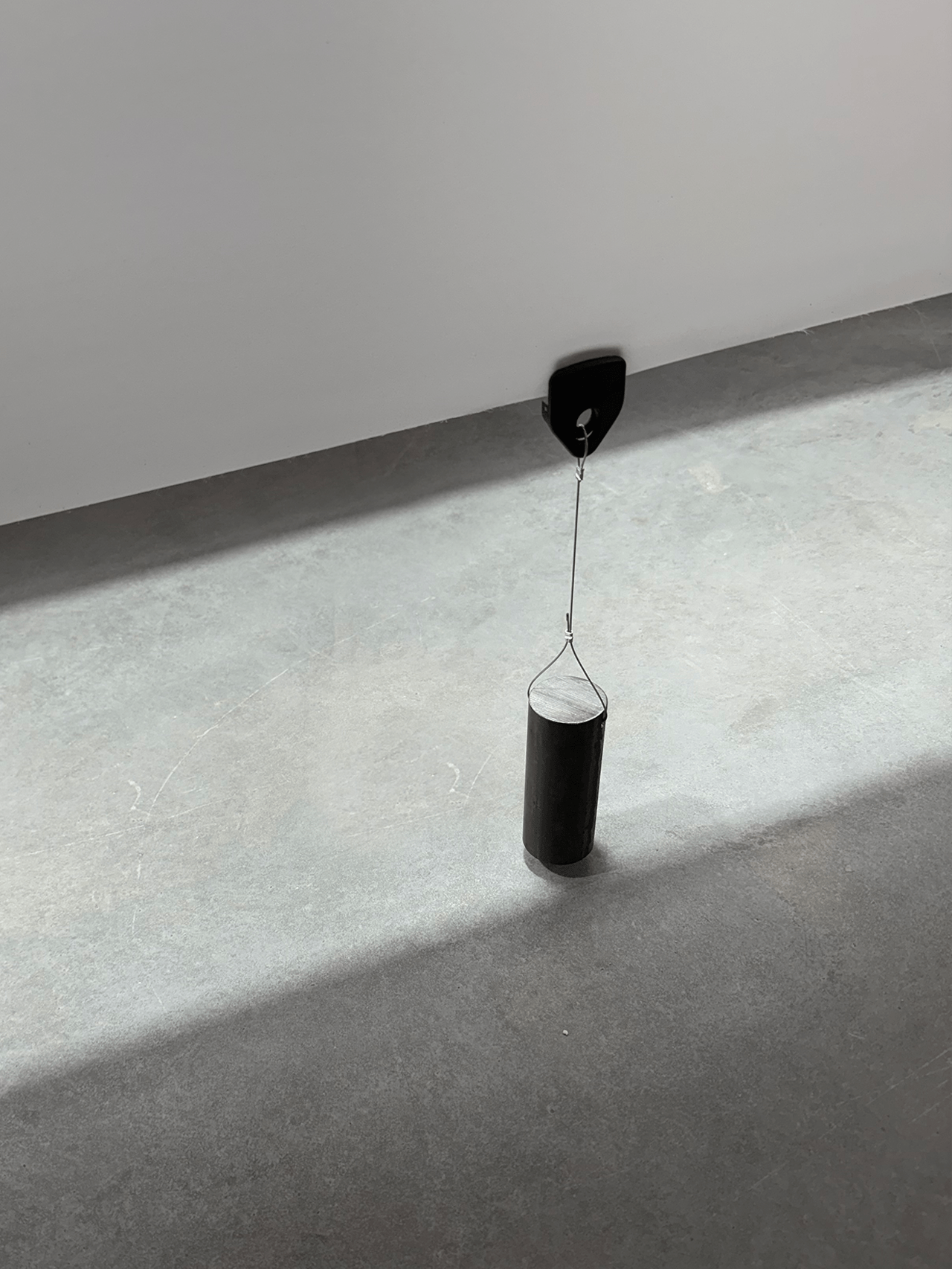
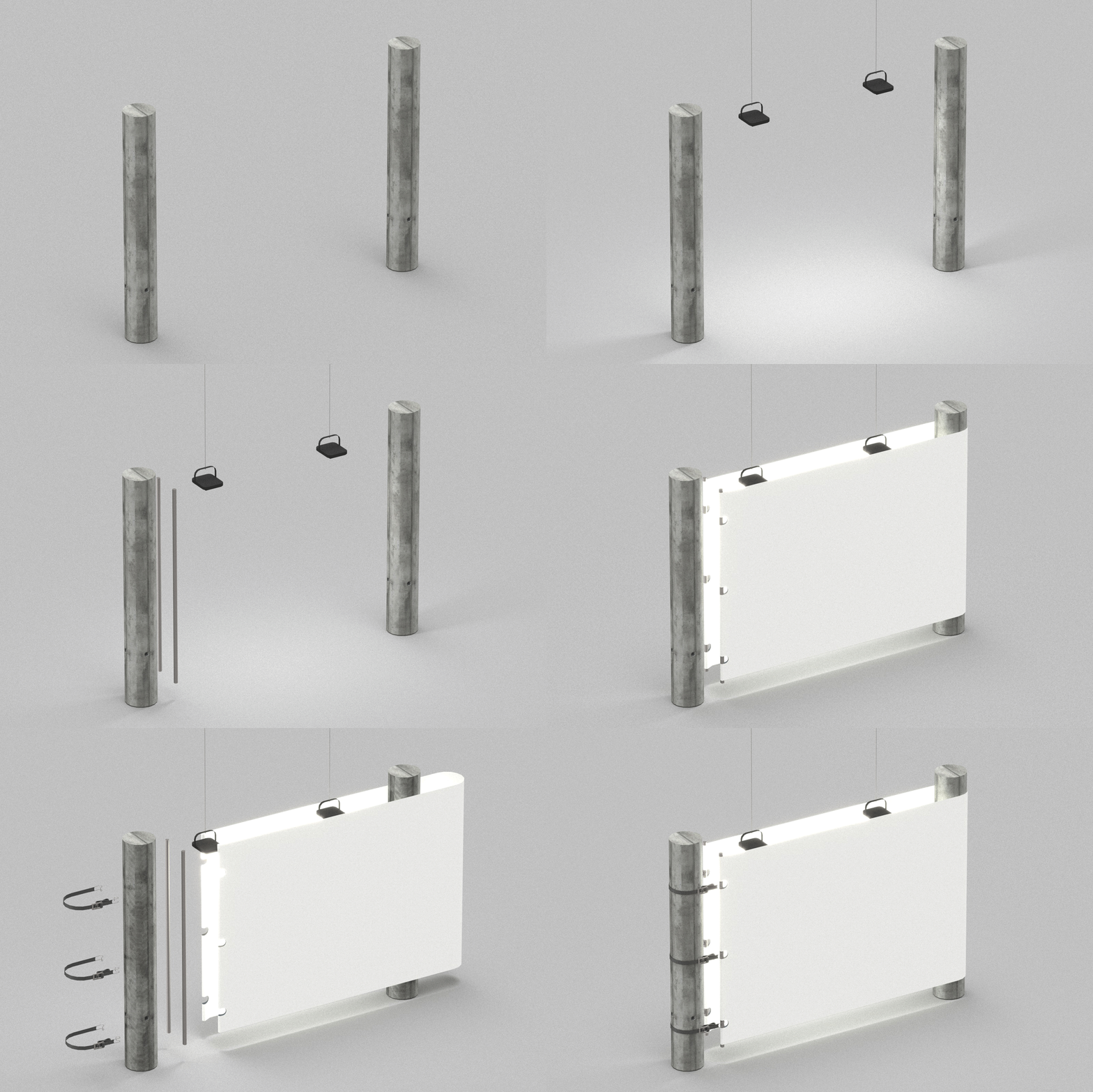
In dialogue with the building, the exhibition unfolds on a single level, organized around a vast double-height space that places it in direct dialogue with the MUDE permanent exhibition, located on the lower floor. A large continuous canvas surface extends horizontally, structured along the column system of the open-plan hall. This element configures new spaces and accommodates titles, curatorial and contextual texts, as well as a compilation of graphic works.
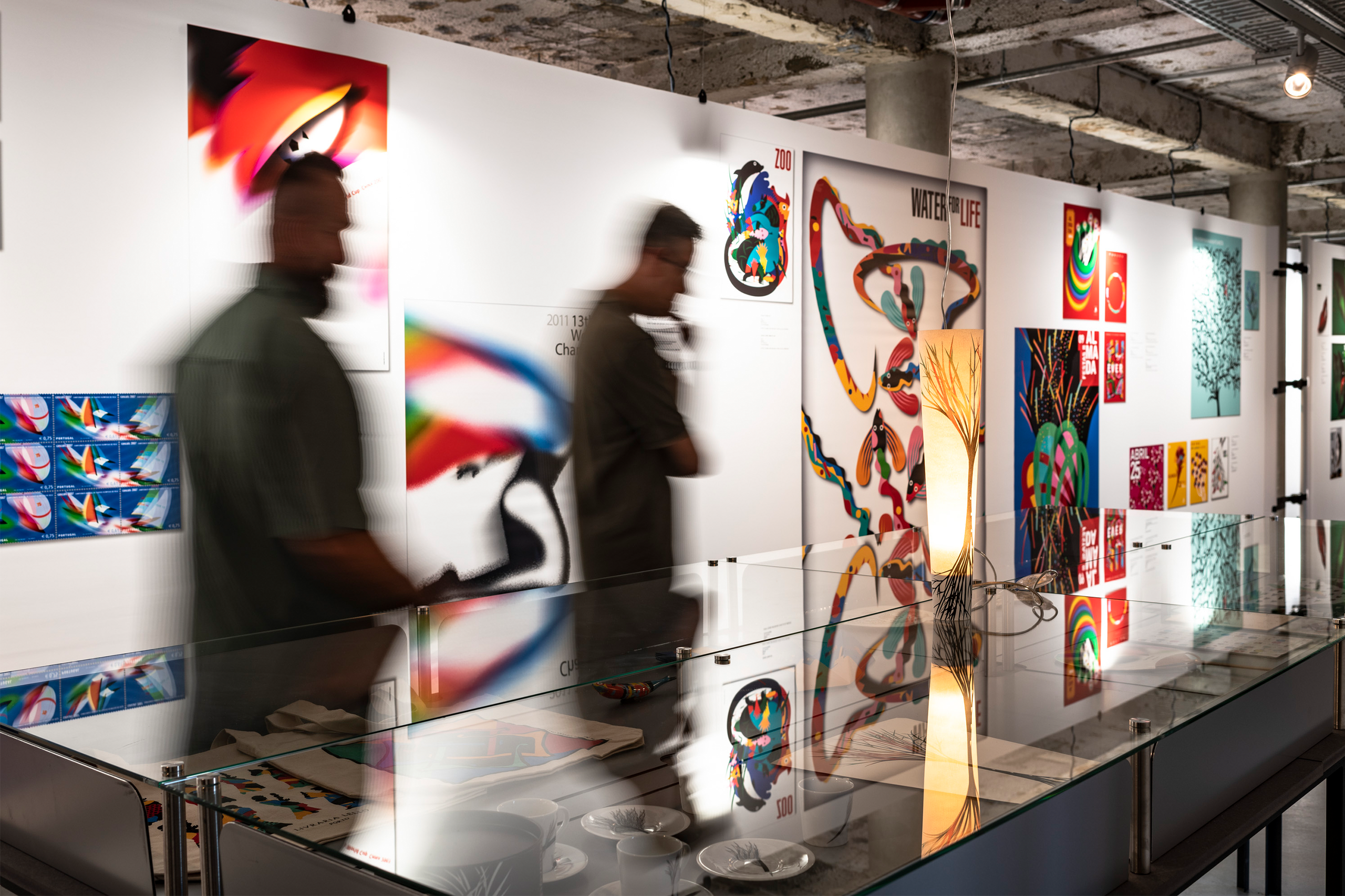
This canvas surface is accompanied by a series of display tables and display cases, where original and significant works—fundamental to understanding João Machado’s work—are presented.
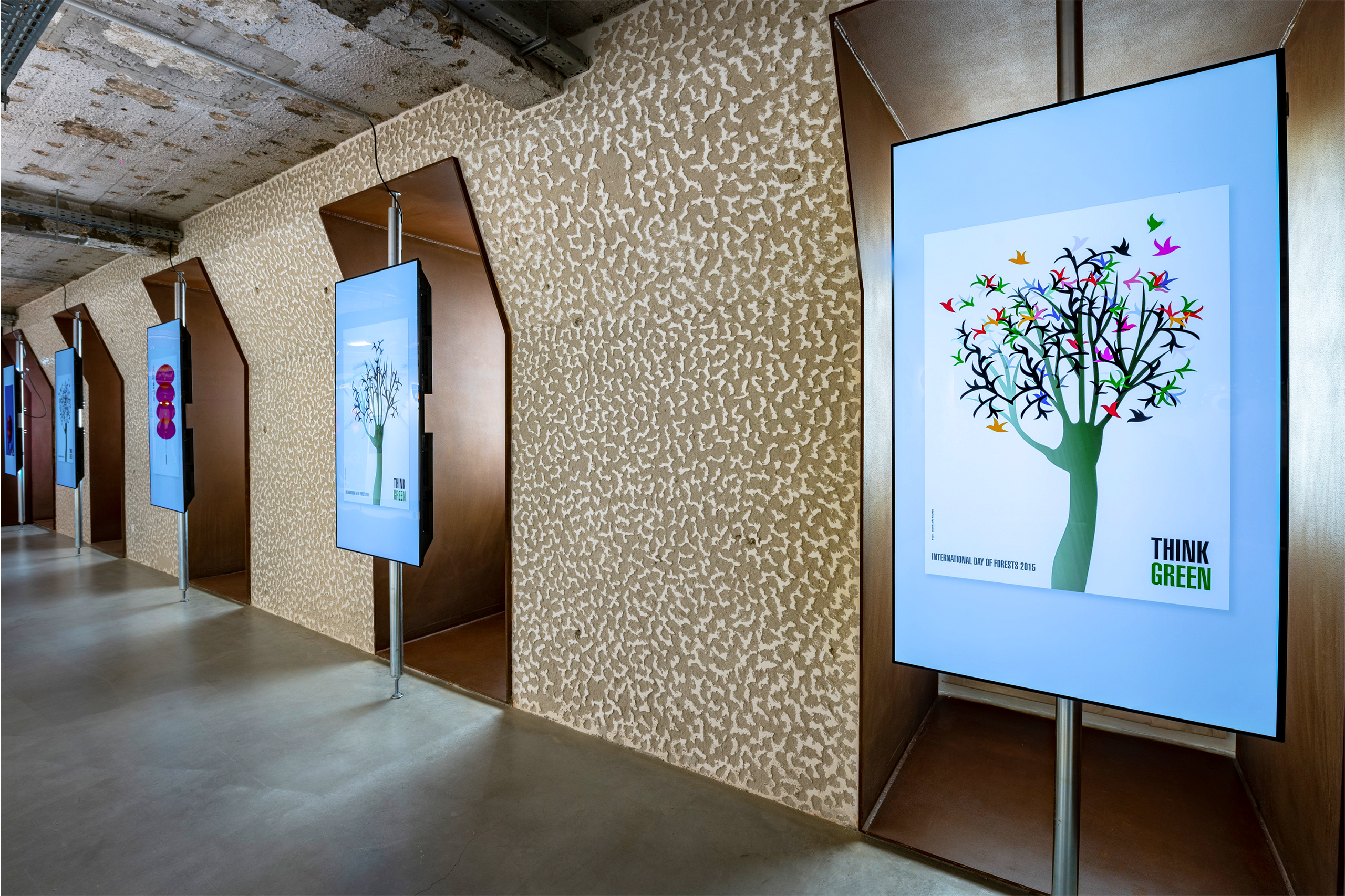
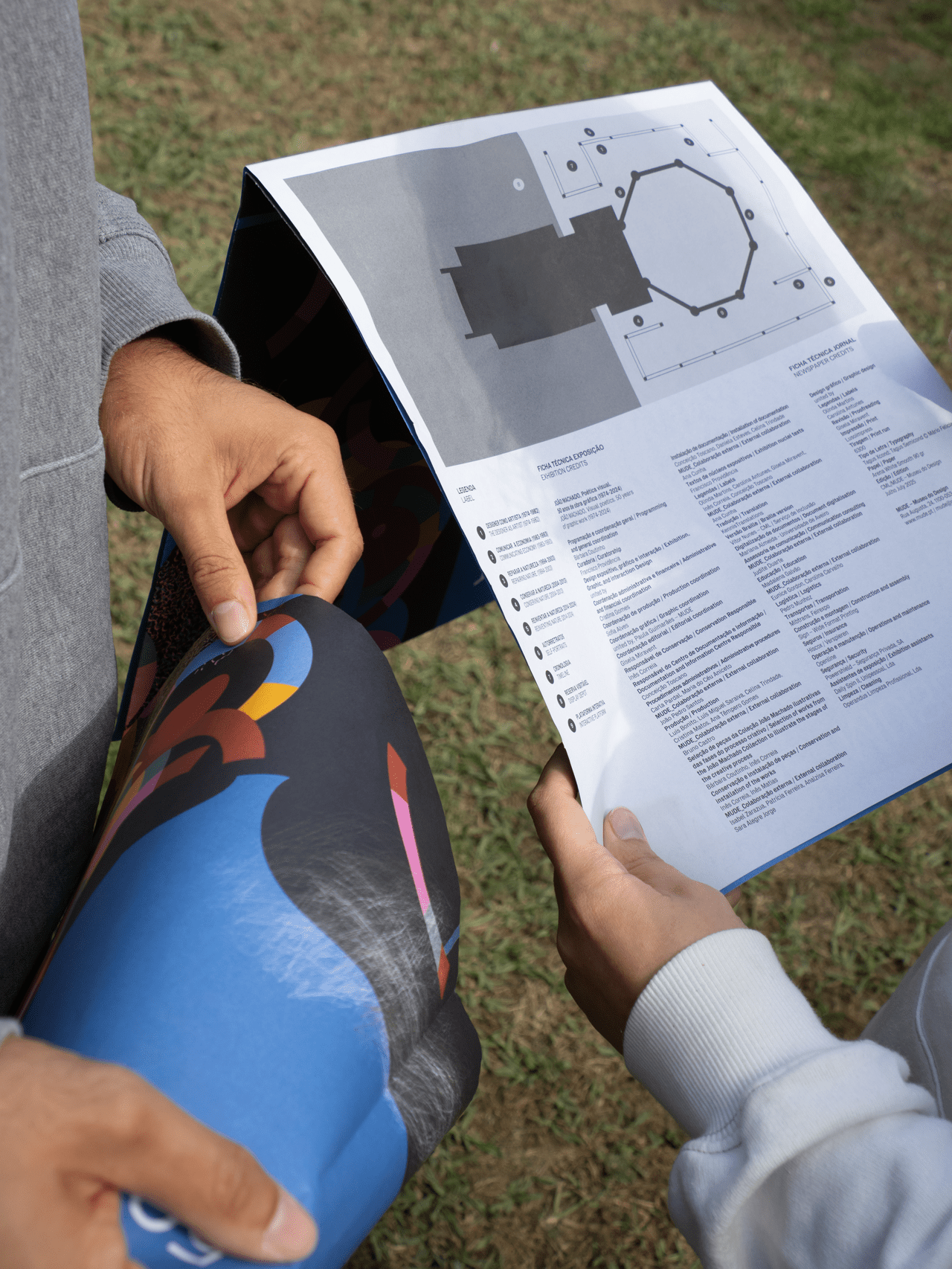
Complementing the exhibition, a series of supports house digital systems for exploring additional content, presenting “moving” posters, and an exploratory digital game in which visitors can interact with and deconstruct some of Machado’s posters.
Within the double-height space, a large wall that dominates the entire area continuously projects a selection of posters, reinforcing the relationship between this exhibition and the MUDE collection.
client
MUDE — Museu do Design
year
2025
location
Lisbon, Portugal
programming and general coordination
Bárbara Coutinho
curator
Francisco Providência
design
Beatriz Soeiro
João Ventura
Laura Pais
Miguel Palmeiro
Pedro Palavra
Pedro Sousa
contractor
sign — wide format printing
photos
MUDE / Luísa Ferreira
united by
2025 © united by
next project
In its 1997 edition, devoted to the 400 best posters of the decade, Novum Press published 45 of Machado's works, making him the most represented designer in that edition.
He was also appointed a member of the International Creators Organization, ICA - ICO, Tokyo (1987), named Design Master by the American magazine Graphis 2014) and invited to join the AGI-Alliance Graphique Internationale (2019). The postage stamps he designed for CT - Correios de Portugal gained international acclaim with the Asiago International Award 2005.
In 2015 he was listed by the International Poster Festival of Shenzen (China) as one of the hundred best designers in the world.
João Machado, Visual Poetics is a chronological, ontological and playful exhibition on 50 years of graphic work by the designer and sculptor João Machado.
As a design exhibition, that is, an exhibition of artefacts of cultural mediation, his 'forms' constit his own specific truth content (Adorno), produced in design projects - meaning, in a laboratory for research and knowledge | duction of the cultural mediator 'form'.
Machado's work is approached here according to a poetic proposal: A poet is one who creates? But poetry, the etymological or of which lies in the Greek poitica ('poie, or emergence and, therefore, creation), is founded in truth and in language (Heidegge truth results from the experience of 'being, language results from the 'form' of pronouncing it - truth and language are the sa as being and form, or form with the condition of being, that is, that which relates us to life. Beyond technology, there is a need the morality of poetry, for the rehabilitation of the (human) being through beauty.
João Machado's work, in its sensory and dream-like immersiveness, sometimes hypnotically alienating, sometimes rousing our conscience into action, does not leave anyone indifferent. For that reason, this exhibition was considered in three scenarios:
· A chronological compilation of facts during the period in question (like a showcase museum);
· A selection of a group of relevant works, organised around five thematic groups (like a point-of-view museum);
· An interactive digital game of de-re-construction of some of his posters (like an accelerator museum).
Francisco Providência
Responding to the curatorial challenge, the exhibition was conceived in accordance with the scenarios proposed by the curators.
In dialogue with the building, the exhibition unfolds on a single level, organized around a vast double-height space that places it in direct dialogue with the MUDE permanent exhibition, located on the lower floor. A large continuous canvas surface extends horizontally, structured along the column system of the open-plan hall. This element configures new spaces and accommodates titles, curatorial and contextual texts, as well as a compilation of graphic works.
This canvas surface is accompanied by a series of display tables and display cases, where original and significant works—fundamental to understanding João Machado’s work—are presented.
Complementing the exhibition, a series of supports house digital systems for exploring additional content, presenting “moving” posters, and an exploratory digital game in which visitors can interact with and deconstruct some of Machado’s posters.
Within the double-height space, a large wall that dominates the entire area continuously projects a selection of posters, reinforcing the relationship between this exhibition and the MUDE collection.
client
MUDE — Museu do Design
year
2025
location
Lisbon, Portugal
programming and general coordination
Bárbara Coutinho
curator
Francisco Providência
design
Beatriz Soeiro
João Ventura
Laura Pais
Miguel Palmeiro
Pedro Palavra
Pedro Sousa
contractor
sign — wide format printing
photos
MUDE / Luísa Ferreira
united by
2025 © united by
next project